
You want a haircut that looks sharp on a Monday and still looks sharp two weeks later. That’s the whole appeal of a low taper fade. It sits low on the sides, blends soft into your natural hairline, and pairs with almost any short style on top. In this guide you’ll get 20+ short hair looks that work with a low taper, the exact words to use with your barber, face shape matching, home trim tips, and a simple upkeep routine so the cut still looks fresh at week three, not just day one.
Whether you’re growing out a buzz cut, switching from a high fade, or just tired of your barber going too short, this article walks you through every angle: what a low taper actually is, how it compares to mid and high fades, which styles suit curly, coily, straight, and wavy hair, and how to keep the whole thing looking clean between visits.
By the end, you’ll know exactly what to say in the chair, how to spot a barber who actually knows how to blend, and what your hair will realistically look like at week one versus week four. No guesswork, no vague “just give me a fade” conversations that end in disappointment.
What Is a Low Taper Fade on Short Hair and Why Is It So Popular?
A low taper fade starts its blend just above the ear, not up near the temple. That’s the short answer. The hair on the sides shortens gradually instead of dropping straight to skin, which is why so many guys who tried a skin fade once and hated the upkeep end up here instead.
Barbers like it because it’s forgiving. You don’t need a fresh cut every 10 days to keep the line sharp, since there’s no hard edge to grow out awkwardly. The top stays the star of the show, whether that’s a short crop, a textured fringe, or a slicked side part.
Its popularity right now comes down to three things. Guys want lower maintenance, they want a cut that still reads as “sharp” in an office or on a date, and social platforms keep pushing short, textured cuts over the longer, heavier styles that were everywhere a few years back.
Think about the last time you sat in a barber’s chair and asked for “something low maintenance.” Nine times out of ten, this is what the barber reaches for. It’s become the default answer for guys who want to look put together without turning their morning routine into a project.
- Low visual contrast between top and sides, so it reads more natural than a skin fade
- Longer regrowth window before the cut looks messy, usually 3 to 4 weeks
- Works on nearly every face shape and hair texture, from tight coils to fine straight hair
- Pairs naturally with beards, since there’s no harsh line competing with facial hair
Low Taper Fringe Haircut Guide: 12 Styles, Every Hair Type, and Exactly What to Tell Your Barber
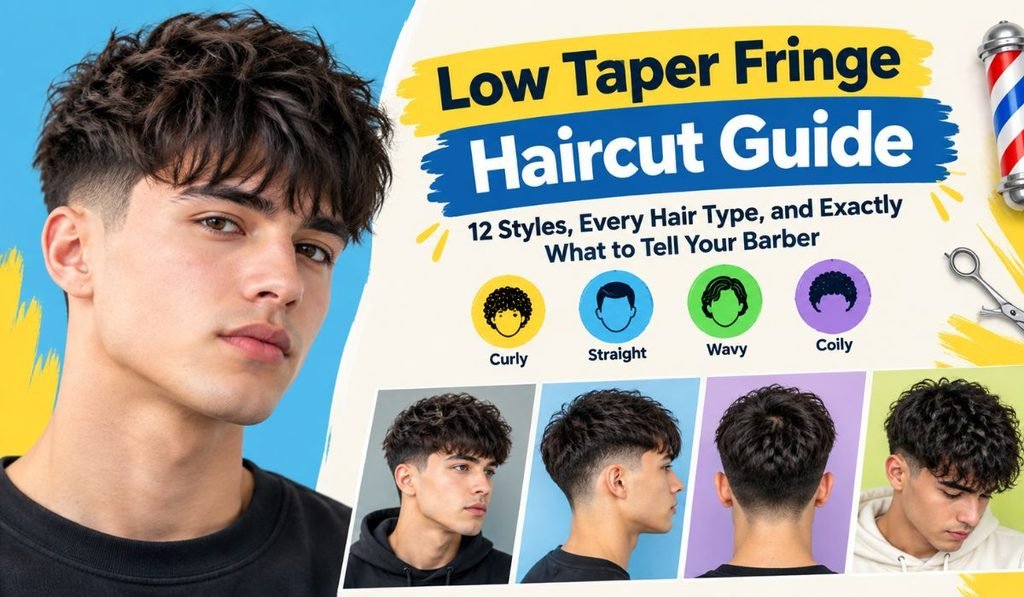
A fringe on top with a low taper on the sides is one of the most requested combos in barbershops right now. It softens the forehead, hides a receding hairline better than a slicked-back style, and works whether your hair is straight, wavy, curly, or coily.
Here’s the thing most guys get wrong: they ask for “a fringe” and nothing else, and end up with something too heavy or too thin for their face. Tell your barber the fringe length you want in fingers, not inches. Two fingers of length on top is a safe, versatile starting point.
12 low taper fringe styles worth trying:
- Classic textured fringe – straight-across bangs with light texture on top
- Side-swept fringe – bangs pushed to one side, great for oval and square faces
- Curly fringe – natural curl pattern left loose over the forehead
- Choppy fringe – uneven, razored ends for a lived-in look
- Wispy fringe – thin, feathered pieces, good for fine straight hair
- Blunt French crop fringe – straight-line bangs sitting just above the brow
- Curtain fringe – parted in the center, framing both sides of the face
- Micro fringe – short, barely-there bangs for guys who want subtle texture
- Layered fringe – multiple lengths blended for movement
- Fringe with hard part – a shaved line separating the fringe from the taper
- Coily fringe – defined curl clumps held with a light styling cream
- Spiky fringe textured crop – gelled up and out instead of forward
What to tell your barber: “Low taper on the sides, blending above the ear, keep two fingers of length on top for a fringe, texture the ends with scissor-over-comb.” That single sentence covers length, blend point, and finish.
A friend of mine switched from a slicked-back style to a curly fringe last spring and said it was the first haircut in years he didn’t have to think about before leaving the house. That’s really the draw here. Once the fringe is cut right, most of these styles need nothing more than a towel dry and maybe a run of your fingers through it.
Don’t skip the mid-cut check-in either. Ask your barber to stop halfway through and let you see the fringe length before they commit to the final trim. Two fingers can look different depending on how your hair sits once it’s dry versus fresh out of the cape.
ALSO READ “High Taper Fade with Design: 28 Razor-Cut Styles to Show Your Barber“
Blowout Taper for Curly Hair: What to Ask Your Barber + How to Style It
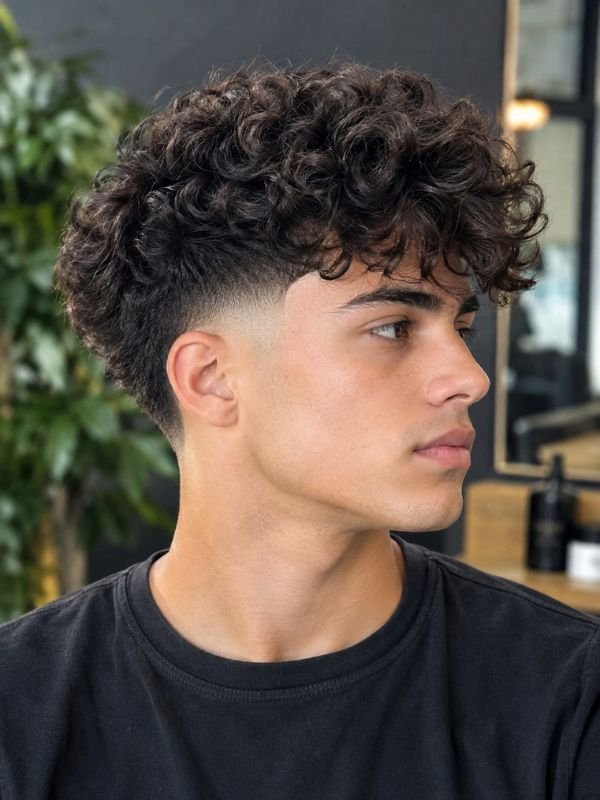
Curly hair and a blowout taper were basically made for each other. The sides taper low and tight, while the top gets blow-dried up and out for volume instead of being pushed flat. It’s the cut you see on guys who want height without length.
Curls shrink when they dry, so length that looks short wet can look shorter once it’s fully dry and blown out. Ask your barber to cut slightly longer on top than you think you need, then judge the final shape after the blowout, not right after the scissors.
What to ask for: “Low taper fade on the sides, leave enough length on top for a blowout, round brush the crown for lift, and don’t cut the curl pattern too short or it’ll lose its shape.”
How to style it at home:
- Apply a curl cream or light gel to damp hair right after washing
- Diffuse or round-brush upward from the roots, not down
- Finish with a light-hold spray to lock the volume without stiffness
- Avoid heavy pomade on curly hair, since it weighs the curl pattern down
Give the style at least two full wash cycles before deciding whether the length is right. Curls settle into their true pattern after a couple of washes, so a cut that feels slightly long in week one often looks exactly right by week two, once the shrinkage evens out.
Blowout Taper Textured Fringe – Low, Mid & High: What to Ask For and How to Style It

This style combines two trends into one cut: a blowout for height and a textured fringe for movement up front. The low, mid, and high labels refer to where the taper starts on the side, not how tall the top gets.
| Taper Start Point | Best For | Maintenance |
|---|---|---|
| Low taper | Office settings, subtle contrast | Every 4 weeks |
| Mid taper | Balanced look, most face shapes | Every 3 weeks |
| High taper | Bold contrast, thicker hair on top | Every 2-3 weeks |
A low taper version of this cut is the easiest to live with day to day, since the blend near the ear grows out gently instead of leaving a visible line. Guys with thick or coarse hair on top usually get the cleanest blowout results here, since there’s more hair to work with for volume.
Styling steps:
- Rough dry with a diffuser or round brush, pushing hair up at the roots
- Comb the fringe forward and down into a soft, textured line
- Apply a matte paste or clay to the ends for separation, not shine
- Set with a light spray if you’re heading somewhere humid
Humidity is the real enemy of this style, more than any product choice. If you live somewhere muggy, ask your barber about a slightly shorter fringe length than you’d normally go with. Less length means less weight for the humidity to drag down by midafternoon.
High Blowout Taper Haircut Guide: Low vs Mid vs High, Every Hair Type

Choosing between a low, mid, or high blowout taper mostly comes down to how much contrast you want and how often you’re willing to get back in the barber’s chair. A low taper is the low-maintenance choice. A high taper gives you sharper lines but needs a touch-up sooner.
Hair type changes the math too. Fine straight hair often looks best with a low or mid taper, since a high fade can expose too much scalp on top of thin strands. Thick, coily, or coarse hair usually handles a high taper better, because there’s enough density up top to balance the contrast.
Quick comparison for every hair type:
- Straight hair: low or mid taper, easier blend, less visible scalp
- Wavy hair: mid taper works well, gives the waves room to move
- Curly hair: low or mid taper, protects curl volume near the hairline
- Coily or kinky hair: high taper looks sharp against dense, textured tops
If you’re not sure which one you’ll like, start with a low taper. It’s the easiest to adjust upward at your next appointment, while going from high back down to low takes longer to grow out evenly.
There’s also a practical money argument here. A low taper stretches further between visits, which adds up over a year of barbershop trips. If you’re cutting back on how often you book appointments, starting low and only going higher once you know your barber’s blending style saves you a few awkward in-between weeks.
How Does a Low Taper Fade Compare to Other Fade Haircuts on Short Hair?
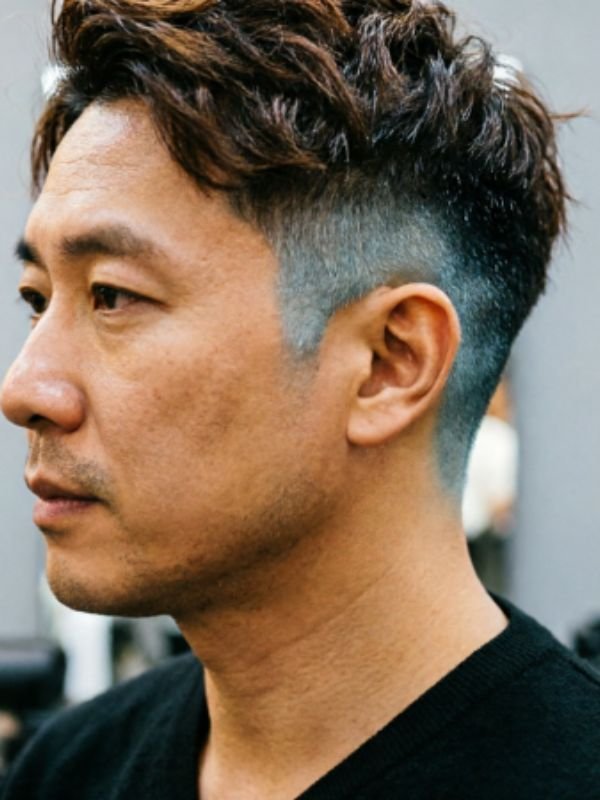
Guys often walk into the barbershop saying “fade” without realizing how many versions exist. A low taper fade is just one branch of a much bigger family, and knowing the differences saves you from getting a cut you didn’t actually want.
The main thing that separates them is where the fade begins and how close to the skin it goes. A skin fade drops to bare scalp. A taper never fully clears to skin, it just gets shorter and shorter until it blends into the top.
| Fade Type | Starting Point | Contrast Level | Regrowth Grace Period |
|---|---|---|---|
| Low taper fade | Above the ear | Low to medium | 3-4 weeks |
| Mid taper fade | Mid-way up the side | Medium | 2-3 weeks |
| High taper fade | Near the temple | High | 2 weeks |
| Skin fade | Varies, drops to skin | Very high | 1-2 weeks |
| Drop fade | Curves down behind the ear | Medium to high | 2-3 weeks |
| Burst fade | Circular around the ear | Medium | 2-3 weeks |
A low taper fade wins on subtlety and grow-out time. A skin fade wins on sharpness right after the cut. If your schedule doesn’t allow biweekly barber trips, the low taper is the more realistic long-term choice.
Think of it less as one cut being “better” than another and more as matching the fade to your actual lifestyle. Someone who travels for work and can’t guarantee a barber every two weeks is going to be happier with a low taper. Someone prepping for a wedding or a photoshoot where sharpness matters for one specific day might lean toward a skin fade instead, even if it’s more upkeep long term.
What Are the Best Low Taper Fade Styles for Short Hair?
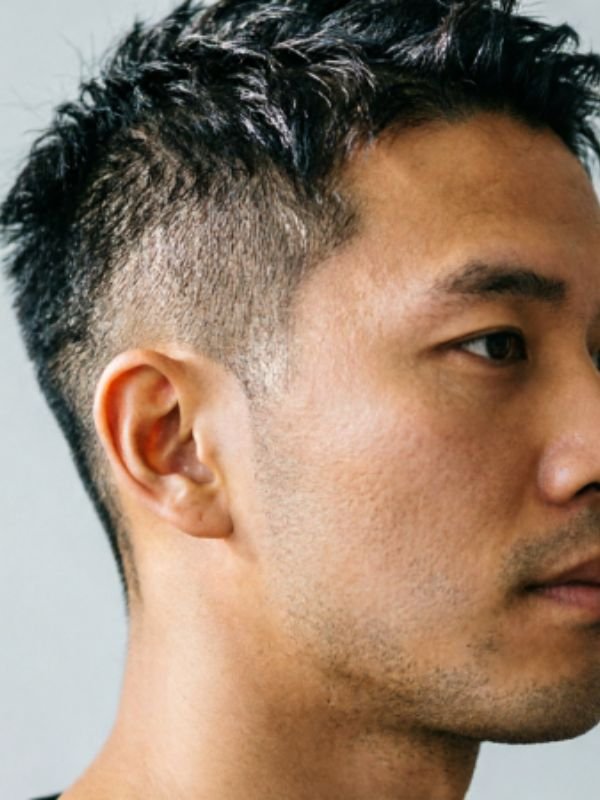
There’s no single “best” style here, it depends on your hair texture, face shape, and how much time you want to spend styling in the morning. That said, a handful of styles consistently come up as favorites among barbers and clients alike.
Top styles worth requesting:
- Textured crop – short, choppy layers on top, minimal styling needed
- Slicked back low taper – classic, professional, works with any face shape
- Side part low taper – sharp part line, great for formal settings
- Buzz cut with low taper – the lowest-maintenance option on this list
- Curly top low taper – natural texture left to do its own thing
- Pompadour low taper – height at the front, tapered sides for balance
- French crop low taper – blunt fringe, short sides, understated and modern
- Faux hawk low taper – more volume down the center, tapered edges
- Spiky low taper – gelled, textured spikes for a younger, edgier feel
- Comb-over low taper – longer top swept to one side over a clean taper
Each of these can be adjusted for curl pattern and density, so don’t be afraid to bring a photo to your barber and ask specifically how it would translate to your hair type.
If you’re genuinely stuck between two or three of these, book a consultation instead of a full cut. Most barbershops will let you talk through options for five minutes before committing the clippers to your head, and that short conversation saves you from walking out with a cut that photographed well on someone else but doesn’t sit right on you.
What is a Low Taper Fade Short on Top, and Which Styles Work Best?

Keeping the top short changes the equation slightly. Instead of relying on length for shape, you’re relying on texture, the part, and the taper itself to create visual interest. It’s arguably the lowest-effort version of this haircut family.
Short-on-top options tend to hold their shape longer between cuts, since there’s less length to grow out unevenly. That makes this combination a favorite for guys with busy schedules, active lifestyles, or anyone who just doesn’t enjoy styling their hair every morning.
Best short-on-top low taper styles:
- Crew cut with a low taper blend
- Textured buzz, slightly longer at the crown
- Caesar cut with a low taper and straight fringe
- Ivy league style, short sides with a soft, brushed-forward top
- Short curly crop, low taper, natural texture left alone
If you want zero morning styling routine, the crew cut or buzz variation is your best bet. If you still want a little texture to play with, the Caesar or Ivy league styles give you just enough length to work a small amount of product through.
Guys switching from a longer top often worry that short-on-top will look too plain. In practice, the taper does most of the visual work here. Even a very short top looks intentional and styled once the sides blend cleanly, because your eye reads the whole shape as one cohesive cut instead of two separate lengths fighting each other.
Which Face Shape Suits a Low Taper Fade Best for Short Hair?

Good news here: a low taper fade is one of the more forgiving cuts across face shapes, because the low blend point doesn’t dramatically change your head’s outline the way a high fade can. Still, a few tweaks per shape make a real difference.
| Face Shape | Recommended Top Style | Why It Works |
|---|---|---|
| Round | Textured crop with height on top | Adds vertical length, breaks up width |
| Square | Slicked back or side part | Softens strong jawline angles |
| Oval | Almost any style, including fringe | Naturally balanced proportions |
| Long | Fringe or curtain style | Shortens visual face length |
| Heart | Side-swept fringe | Balances wider forehead, narrower chin |
| Diamond | Textured crop or pompadour | Adds width at the forehead |
If you’re between two shapes or unsure which one describes you, lean toward whichever top style adds height if your face is rounder, and whichever adds width if your face is longer. Your barber can also eyeball this in about ten seconds once you’re in the chair.
A quick trick for figuring out your own face shape at home: pull your hair back, look straight into a mirror, and trace the outline of your face on the glass with a dry-erase marker or a piece of tape. Step back and compare that outline to the shapes in the table above. Most guys are surprised they’re not the shape they assumed.
How Do You Ask Your Barber for a Low Taper Fade on Short Hair?
Miscommunication is the number one reason guys leave the barbershop disappointed. Barbers hear “fade” dozens of times a day, so vague requests get filled in with the barber’s own assumptions, not necessarily yours.
Be specific about three things every time: where the taper starts, how much length stays on top, and what finish you want (matte, textured, slicked). Bringing a reference photo removes almost all remaining guesswork.
A script you can actually use:
- “I want a low taper fade, blending right above my ear, not up by my temple.”
- “Keep [X fingers / X inches] of length on top for a [fringe / crop / slicked style].”
- “Texture the top with scissor-over-comb, not a heavy razor cut.”
- “No hard part line, I want it to blend naturally.”
If you liked your last cut, ask the barber to write down the guard numbers and technique they used so your next visit, even with a different barber, starts from the same baseline.
It also helps to say what you don’t want, not just what you do. “Please don’t take the sides up past my ear” or “I don’t want a hard line, keep it blended” gives the barber guardrails, which matters more than you’d think when you’re in a chair you’ve never sat in before.
Can You Do a Low Taper Fade on Short Hair at Home?
Yes, but with a caveat. A low taper fade is genuinely one of the more forgiving fades to attempt at home, since the blend is gradual rather than sharp, which hides small mistakes better than a skin fade would.
That said, the back of your head is the tricky part. Two mirrors, decent lighting, and a clipper with multiple guard attachments make this far more manageable than trying to eyeball it in one bathroom mirror.
Step-by-step for a home low taper fade:
- Start with clean, dry, detangled hair
- Use a longer guard (like a 3 or 4) on top, working from front to back
- Switch to a shorter guard (1 or 1.5) on the sides, starting just above the ear
- Blend the two lengths using a “flicking” motion, moving the clippers up and out quickly
- Check both sides in a mirror for symmetry before finishing
- Clean up the neckline and around the ears last with a trimmer
Tools worth having on hand:
- A clipper with adjustable guard lengths
- A separate trimmer for edges and the neckline
- Two mirrors, or a phone camera in mirror mode for the back
- A cape or old towel to protect your clothes
If the blend looks patchy on your first attempt, don’t panic. It’s genuinely easier to fix a low taper than a skin fade, since there’s more forgiving length to work with while you smooth things out.
Practice on a lower guard setting than you think you need the first few times. It’s much easier to go back over an area and take a little more off than it is to fix hair you’ve already cut too short. Give yourself permission for the first attempt to be a little rough, most guys get noticeably better by their second or third try.
Common Mistakes to Avoid With a Low Taper Fade
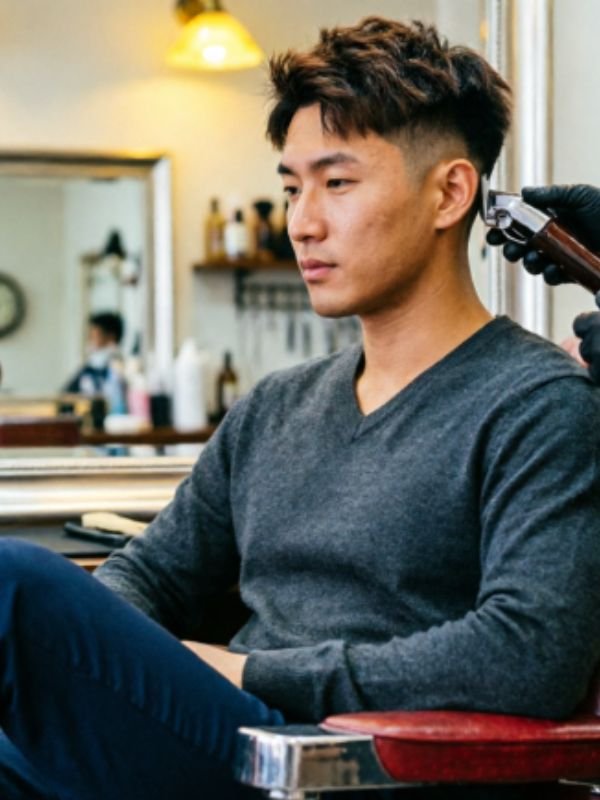
Even a forgiving cut like this one has a handful of ways it can go wrong, and most of them come down to communication or upkeep, not the haircut itself.
Watch out for these:
- Asking for “a fade” with no other detail, which leaves the blend point entirely up to the barber’s guess
- Going too long between trims, letting the taper grow out into an uneven, shapeless mess instead of a soft, natural blend
- Overusing heavy product on curly or coily hair, which flattens the exact volume the cut is supposed to show off
- Skipping the neckline trim at home, since this is usually the first part of the cut to look messy again
- Copying a reference photo exactly without accounting for your own hair density, which can leave a style looking thin or overly thick compared to the photo
A quick fix for most of these is simply slowing down at the start of the appointment. Two extra minutes of conversation with your barber prevents almost every mistake on this list.
How Do You Style a Low Taper Fade with Short Hair?

Styling short hair with a low taper is faster than most guys expect, usually under five minutes once you’ve got your routine down. The sides need nothing. All your attention goes to the top.
The product you use matters more than the amount of time you spend on it. Matte clay or paste gives texture without shine, pomade gives a slicked, polished look, and a light sea salt spray adds texture for a more undone, natural feel.
A simple daily routine:
- Towel-dry hair until it’s damp, not soaking wet
- Apply a dime-sized amount of product, warming it between your palms first
- Work it through with your fingers, not a comb, for more natural texture
- Style forward, back, or to the side depending on your top length
- Let it air dry the rest of the way, or finish with a quick blast of cool air
For curly or coily tops, skip step 3’s finger-styling and instead scrunch a curl cream through damp hair, then let it dry naturally or diffuse it for extra volume.
Products worth keeping on your shelf:
| Product | Best For | Finish |
|---|---|---|
| Matte clay | Textured crops, short tops | Natural, no shine |
| Pomade | Slicked back, side part | High shine, strong hold |
| Sea salt spray | Adding texture to straight or wavy hair | Undone, beachy |
| Curl cream | Curly and coily tops | Defined, bouncy |
| Light hold gel | Fringe styles, spiky looks | Flexible hold |
You don’t need all five. Pick one or two based on your top style and stick with them long enough to learn how your hair actually responds, rather than switching products every week and never quite dialing in the routine.
How Do You Maintain a Low Taper Fade on Short Hair?
The whole appeal of a low taper fade is that it doesn’t demand constant barbershop visits. Most guys can stretch this cut to 3 or 4 weeks before it starts looking rough, compared to 2 weeks for a skin fade.
Between visits, a little home maintenance keeps things looking intentional instead of just “grown out.” A trimmer for neckline touch-ups and regular washing to avoid product buildup go a long way.
A realistic maintenance schedule:
| Task | Frequency |
|---|---|
| Full barber visit (fade refresh) | Every 3-4 weeks |
| Neckline and edge trim at home | Weekly |
| Wash with shampoo | 2-3 times per week |
| Deep condition (curly/coily hair) | Weekly |
| Trim split ends on top | Every 6-8 weeks |
Washing too often can dry out your scalp, especially with coily or curly textures, so stick to a moisturizing shampoo and don’t overdo it. If your top starts flopping over and losing shape before your next appointment, a small amount of dry shampoo at the roots buys you a few extra days of volume.
Set a recurring reminder on your phone for booking your next appointment about a week before you actually need it. Good barbers book up, especially the ones worth returning to, and scrambling for a same-day slot the morning of an event is how a lot of guys end up settling for whoever’s available instead of who they actually trust.
Which Celebrities Wear a Low Taper Fade on Short Hair?
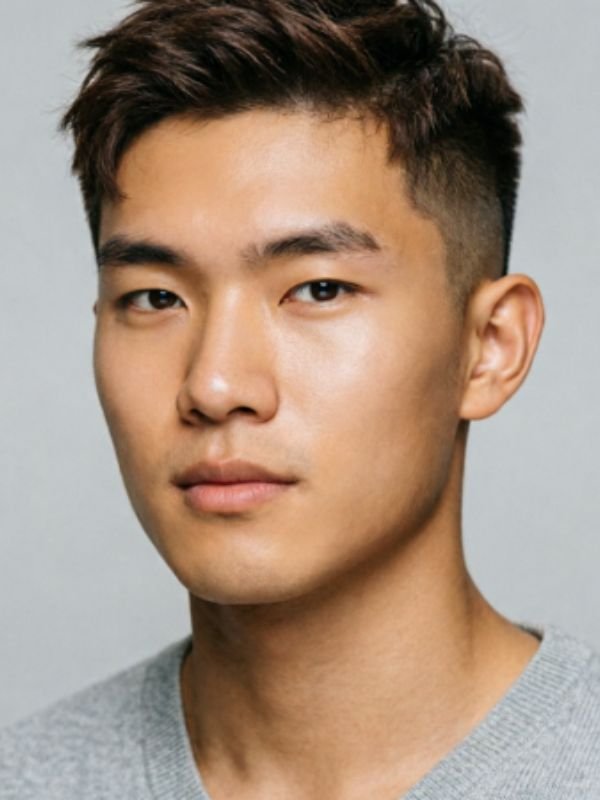
Seeing a haircut on someone recognizable makes it a lot easier to picture on yourself, and plenty of well-known guys have worn some version of a low taper fade over the years. It shows up constantly on athletes, actors, and musicians who need something sharp but low-maintenance for their schedules.
Athletes especially favor this cut, since it holds up under helmets, sweat, and long travel schedules better than a heavily styled top would. Actors lean toward it for red carpet versatility, since it looks polished without looking like it took an hour to style.
Where you’ll spot it:
- On the sidelines of most major sports leagues, worn by players who need a wash-and-go cut
- On red carpets, usually paired with a slicked or side-part top
- In music videos and album covers, often with a curly or textured top left more natural
- On social media, where barbers post before-and-afters tagged with celebrity names as reference points
You don’t need to match a specific celebrity’s exact cut. Use their photo as a reference point for proportion and length, then let your barber adjust it for your own hair type and face shape.
Reference photos work best when you pick someone with a similar hair texture and density to yours, not just someone whose overall look you like. A photo of a guy with thick, coarse hair won’t translate cleanly onto fine, thin hair, even if the barber is skilled, simply because the two textures hold shape differently.
What to Expect Week by Week as a Low Taper Fade Grows Out
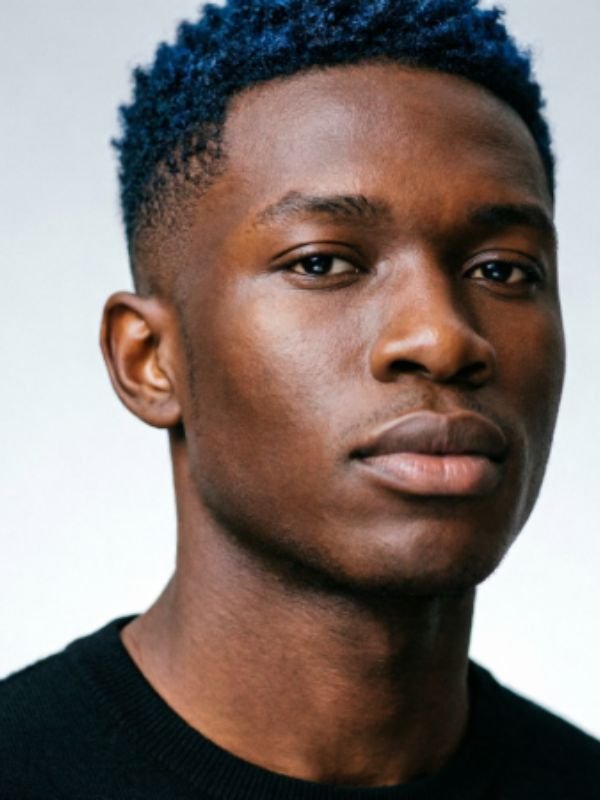
One thing barbers rarely explain up front is how the cut actually changes between visits. Knowing what to expect each week helps you decide when it’s time to book again instead of waiting until it looks obviously overgrown.
Week 1: The cut is at its sharpest. The blend is crisp, the top holds its shape easily, and styling takes almost no effort.
Week 2: The sides start softening slightly. You might notice a touch more length near the ear, but the overall shape still looks intentional.
Week 3: This is usually the sweet spot for a touch-up. The blend is looser, the top has grown enough to feel different in your fingers, and some guys like this slightly shaggier stage while others are ready to head back in.
Week 4: The taper starts losing its defined shape. The sides and top begin blending into one length, and if you go much past this point, you’re really just growing your hair out rather than maintaining the cut.
Weeks 5-8: By this point, you’ve effectively grown out of the low taper fade entirely. This window is actually a good opportunity if you’re considering a style change, since your hair is already partway toward a longer look.
Knowing this timeline helps with planning around events too. If you have something coming up in three weeks, book your appointment for a few days before, not the morning of, so the cut has a day or two to settle before anyone sees it.
Personalizing Your Low Taper Fade: Tips to Make It Your Own
A haircut off a reference photo is a starting point, not a rulebook. Small tweaks make the same base cut feel personal instead of copied straight off someone else’s head.
Ways to personalize the cut:
- Add a subtle hard part if you want a slightly sharper edge without going to a full skin fade
- Play with color, even a low-key balayage or subtle fade in tone, to add dimension on top
- Adjust the taper height slightly season to season, lower in colder months, a touch higher in summer
- Incorporate facial hair to frame the whole look, since a low taper pairs naturally with most beard styles
- Ask your barber about small design lines near the part if you want a detail without going too bold
Keep a photo log on your phone of cuts you liked and didn’t. Over two or three visits, you and your barber will land on a version of the low taper that’s genuinely yours, not just a copy of a photo from the internet.
Choosing the Right Barber for Your Low Taper Fade
Not every barber specializes in blending. Fades in general, and taper fades especially, take a steadier hand than a basic scissor cut, since the whole look depends on a smooth transition rather than a single clean line.
How to spot a barber who’s good with tapers:
- Their portfolio shows several fade photos, not just one or two lucky shots
- They ask questions about your hair type and lifestyle before they start cutting
- They use clippers over combs for blending, not just guard changes alone
- They check both sides of your head in the mirror before calling the cut finished
- Past clients specifically mention fades or tapers in their reviews, not just “great haircut”
If you’ve had two or three disappointing fades in a row, it’s usually not your hair, it’s the barber. Switching shops, even to somewhere slightly less convenient, is often the single biggest upgrade you can make to how this haircut actually looks on you.
Low Taper Fade for Fine vs Thick Hair Densities
Density changes how a low taper reads even more than texture does. Two guys with the exact same haircut request can walk out looking noticeably different simply because one has fine hair and the other has thick, dense hair.
Fine hair: Ask for slightly less contrast between the top and sides, since a big gap in length can make thin hair look even sparser by comparison. A low taper is already gentler than a high fade, which makes it a naturally good match here. Keep the top a bit longer than you think you need, since fine hair loses apparent volume as it dries.
Thick hair: You have more room to play with contrast and texture. A low taper on thick hair often looks fuller and more intentional, since there’s enough density on top to create real shape. Ask your barber about thinning shears if the top feels bulky, especially in warmer months.
Medium density: Most of the styles in this guide were designed with medium density in mind, so you likely won’t need major adjustments beyond your usual length and finish preferences.
Bring this up before the clippers come out, not after. A barber who knows your density ahead of time can adjust their guard choices and blending technique from the very first pass, instead of correcting course halfway through.
What is the main difference between a low taper and a low fade? A taper never fully clears to skin, while a fade can. A low taper keeps a bit of length on the sides even at its shortest point, which softens the overall look.
How often should I get a low taper fade touched up? Most guys go every 3 to 4 weeks, longer than a skin fade needs. That grace period is one of the biggest reasons people switch to this style.
Does a low taper fade work on thick hair? Yes, it actually balances thick hair on top nicely by reducing bulk on the sides. Ask about thinning shears if the top ever feels too heavy.
Can women get a low taper fade too? Yes, it’s increasingly popular on short pixie and undercut styles for women as well, especially paired with a longer, textured top.
Is a low taper fade good for a receding hairline? Yes, since it keeps more length near the temple than a high fade would, it draws less attention to a receding line than sharper fade styles.
What guard number is used for a low taper fade? Barbers typically blend from a 1 or 1.5 on the sides up to a 3 or 4 near the top, though the exact numbers shift based on your hair density.
Does a low taper fade suit curly hair? Yes, it’s one of the most popular choices for curly hair since it keeps volume on top intact while still cleaning up the sides.
How long does it take to grow out a low taper fade? Around 6 to 8 weeks before it loses its shape completely and needs a fresh cut or a deliberate restyle.
Is a low taper fade professional enough for an office job? Yes, it’s one of the more conservative fade options and reads as neat and polished in most workplaces and formal settings.
Can I get a low taper fade with a beard? Absolutely, the low blend on the sides pairs well with most beard lengths and shapes without competing for attention.
Does a low taper fade cost more than a regular haircut? Usually not, most barbershops price it the same as any other fade, though highly detailed blending work at a specialty shop may cost a bit more.
Can I switch from a high fade to a low taper fade in one visit? Often yes, since a low taper simply means less contrast, your barber can usually soften an existing high fade down to a low taper in a single appointment.
Final Takeaways
A low taper fade on short hair gives you a cut that’s sharp without demanding constant upkeep. It flatters nearly every face shape, works across straight, wavy, curly, and coily textures, and grows out gracefully instead of leaving an awkward line after three weeks.
Bring a clear reference to your next appointment, use the exact wording from this guide, and don’t be afraid to personalize the details over a few visits. Once you find your version of the low taper fade, it becomes the easiest cut to maintain, style, and keep looking fresh, visit after visit.
At the end of the day, a haircut should work with your life, not add another chore to it. That’s the entire case for this style. Low upkeep, forgiving regrowth, and enough versatility to match nearly any top style you’re drawn to. Save this guide, screenshot the sections that apply to your hair type, and walk into your next appointment already knowing exactly what to ask for.

Ethan Parker is a hair and hairstyle writer with 5 years of experience researching haircuts, styling techniques, and hair trends. He shares simple tips, practical guides, and hairstyle ideas to help readers choose looks that suit them. His goal is to make hair care and styling easy to understand for everyone.

1 thought on “Low Taper Fade on Short Hair: 20+ Best Styles for Men (2026)”