
If you’ve been scrolling through barbershop inspiration lately, chances are you’ve noticed one haircut showing up again and again: the low taper fade long hair combo. It’s the kind of cut that gives you the best of both worlds — sharp, clean edges at the bottom paired with length and texture up top that you can actually style. Unlike a full fade that shaves everything close, a low taper fade keeps things subtle near the ears and neckline while letting the hair on top grow out, curl, wave, or flow.
This guide breaks down everything you need to know about the low taper fade long hair trend for 2026 — from the best styles for different face shapes and hair types, to what you should actually say to your barber, to the products and maintenance routine that keep it looking fresh between visits. Whether you’ve got straight hair, curls, waves, or coils, there’s a version of this cut built for you.
Let’s get into it.
What Is a Low Taper Fade with Long Hair, and Who Does It Work Best For?
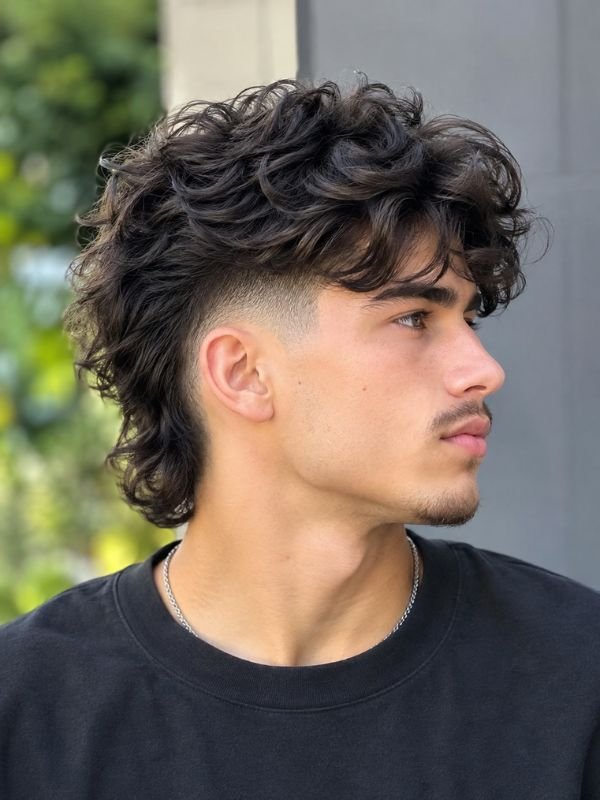
A low taper fade long hair style is a haircut where the fade starts very close to the hairline — right above the ears and around the back of the neck — and blends gradually into longer hair on top. Because the fade sits low, it’s subtle. It doesn’t scream “haircut” the way a high or mid fade does. Instead, it quietly cleans up the sides while leaving room for volume, curls, waves, or a swept-back look on top.
This cut works well for almost anyone, but it’s particularly flattering for:
- Men who want a low-maintenance look that still feels polished
- Guys with thick or curly hair who want to keep length without looking bulky
- Professionals who need something workplace-appropriate but not boring
- Anyone transitioning from a buzz cut who wants to grow their hair out without looking messy in the process
Because the fade is minimal, it also suits guys who aren’t ready to commit to a dramatic style change. It’s a gateway cut — subtle enough for conservative workplaces, stylish enough to stand out on weekends.
What Is a Low Taper Fade with Long Hair?
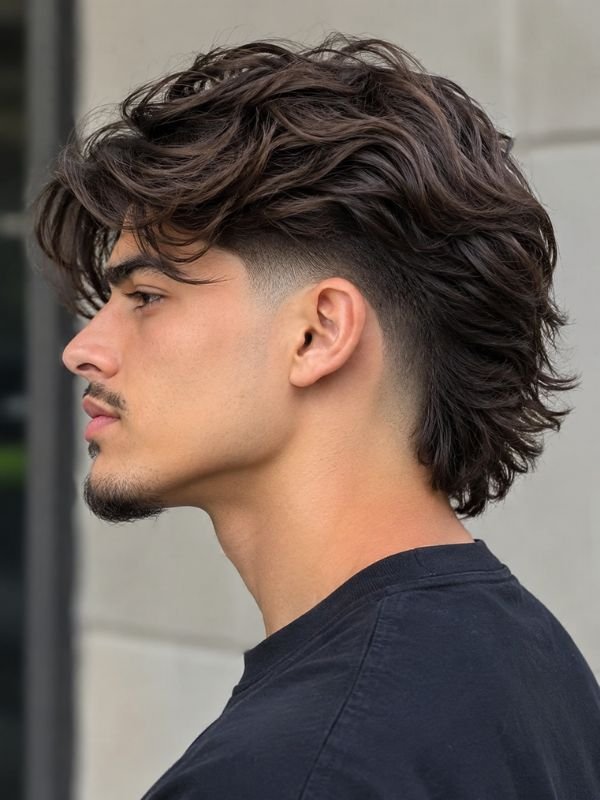
To break it down simply: a taper fade is a gradual shortening of hair length from top to bottom. A “low” taper means that gradual blend happens closer to the skin, usually starting an inch or so above the ear rather than higher up the head. Pairing that with long hair on top means the barber leaves 3 to 6+ inches of length at the crown, depending on your preference.
The result is a haircut with three visible zones:
- The base — closely trimmed skin or near-skin fade at the neckline and around the ears
- The blend — a smooth, gradual transition zone where the clipper work fades upward
- The top — longer hair left to be styled, whether that’s slicked back, textured, curled, or worn naturally
This structure is what makes the low taper fade so versatile. Because the fade is low and subtle, the styling options on top are nearly endless.
Why Is the Low Taper Fade Long Hair So Popular in 2026?
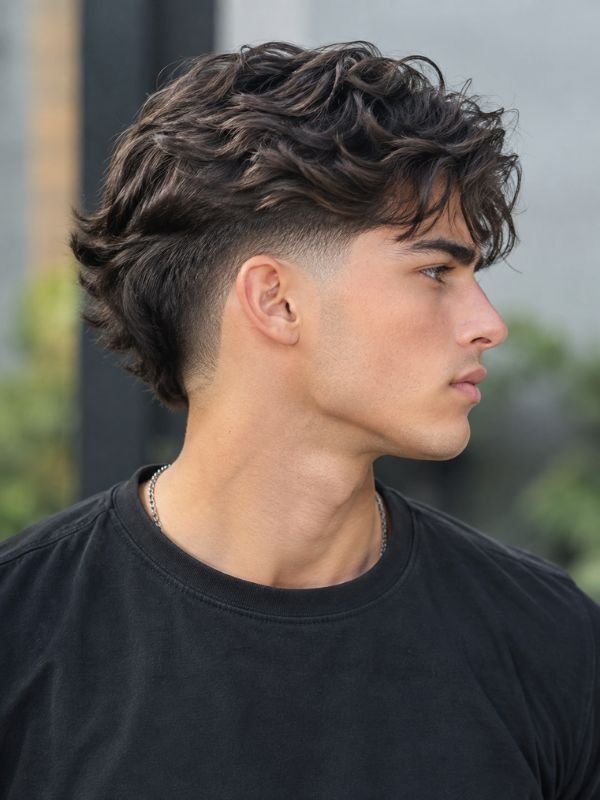
A few reasons explain why this cut has dominated barbershop requests this year.
It’s low-maintenance but high-impact. You don’t need to visit the barber every two weeks like you would with a high skin fade. A low taper only needs touch-ups every 4 to 6 weeks, which makes it appealing to guys who want a sharp look without constant upkeep.
It works with natural texture. Curly, wavy, and coily hair types have had a moment in mainstream style over the past few years, and the low taper fade lets that natural texture shine on top while still looking intentional and groomed.
Celebrities and athletes keep wearing it. From footballers to musicians, the long-on-top, low-fade-on-the-sides combination has become a red carpet and sideline staple, which naturally trickles down into everyday barbershop requests.
It’s adaptable across hair types and ethnicities. Unlike some trends that only work for specific hair textures, the low taper fade long hair look genuinely adapts to straight, wavy, curly, and coily hair, making it one of the most universally requested cuts of the year.
ALSO READ “Low Taper Fade on Short Hair: 20+ Best Styles for Men (2026)“
35 Best Low Taper Fade Long Hair Styles for Men
Here’s the full rundown of styles worth showing your barber, organized by general category so you can find your vibe quickly.
Classic & Slicked Styles
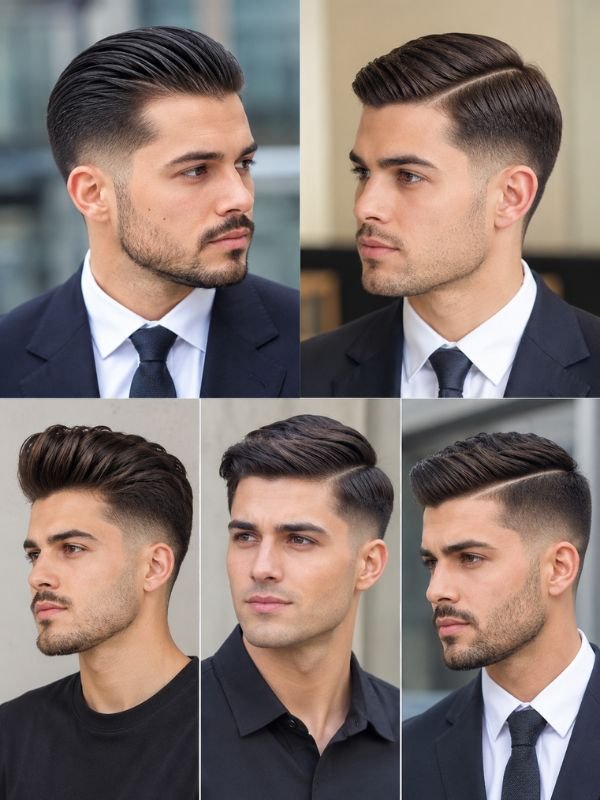
- Low Taper with Slicked-Back Top — a polished, boardroom-ready look
- Low Taper Side Part — timeless and professional
- Low Taper Pompadour — height at the front, tapered sides
- Low Taper Comb Over — clean, structured, and versatile
- Low Taper with Hard Part — adds a sharp geometric line
Curly & Textured Styles
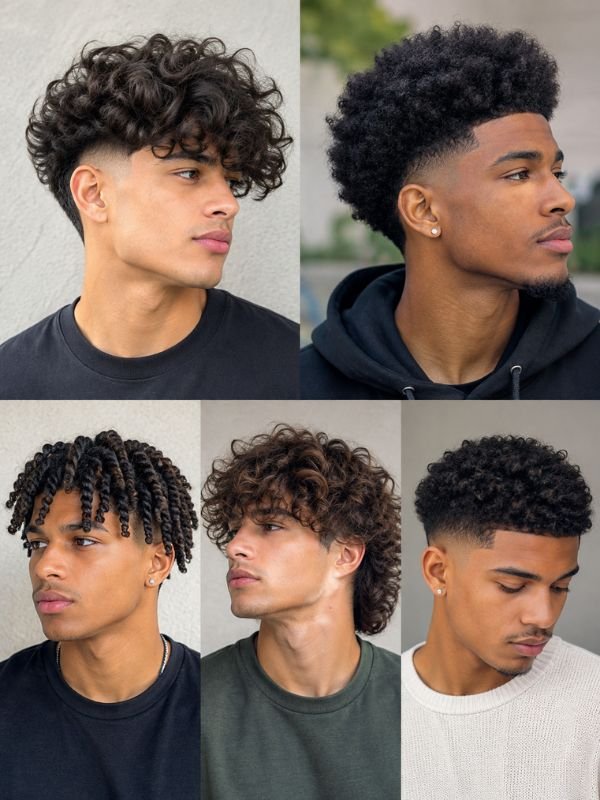
- Low Taper Curly Fringe — curls left long and loose at the front
- Low Taper Afro Fade — natural volume up top, tight fade below
- Low Taper Twist Out — defined twists with a clean base
- Low Taper Curly Shag — layered curls for a lived-in look
- Low Taper Coily Crop — shorter curls on top, tapered sides
Wavy Styles
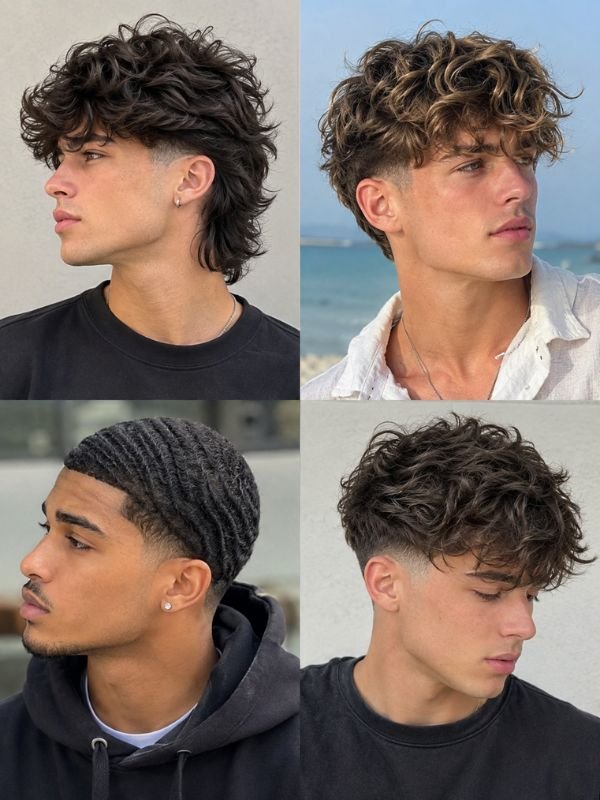
- Low Taper Wolf Cut — shaggy layers meet a subtle fade
- Low Taper Beach Waves — relaxed, tousled texture
- Low Taper Brushed-Back Waves — 360 waves paired with tapered sides
- Low Taper Messy Wave Crop — undone, effortless styling
Long & Flowing Styles
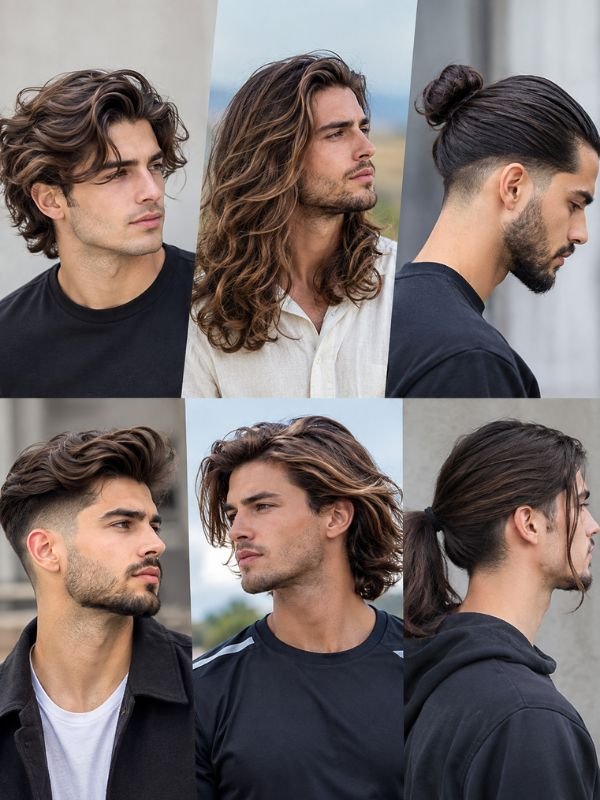
- Low Taper Man Bun — length pulled back, clean sides
- Low Taper Undercut with Long Top — dramatic length contrast
- Low Taper Flow Cut — swept-back, athlete-inspired style
- Low Taper Shoulder-Length Cut — for guys growing hair out long-term
- Low Taper Ponytail Style — practical for very long hair
Fringe & Bang Styles
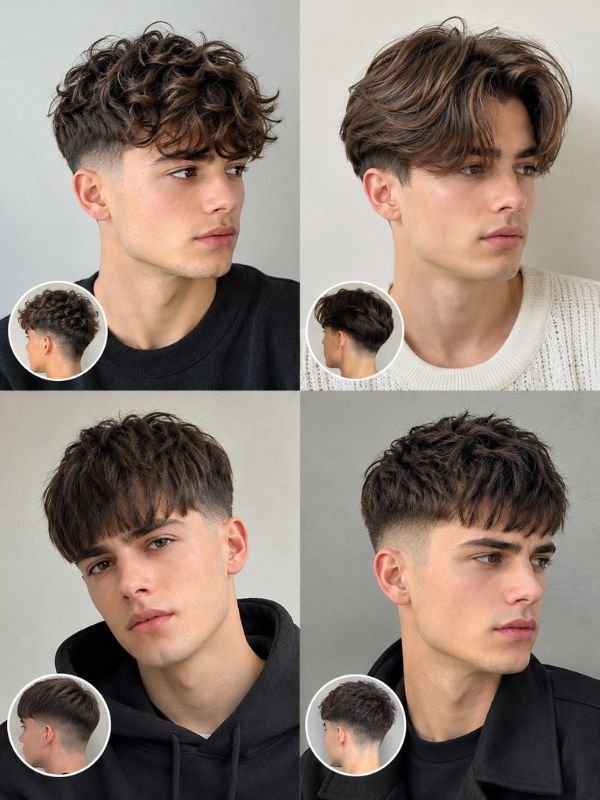
- Low Taper Textured Fringe — choppy bangs with a soft fade
- Low Taper Curtain Fringe — center-parted, framing the face
- Low Taper Blunt Fringe — straight-cut bangs, edgy contrast
- Low Taper French Crop with Fringe — short fringe, tapered sides
Modern & Edgy Styles
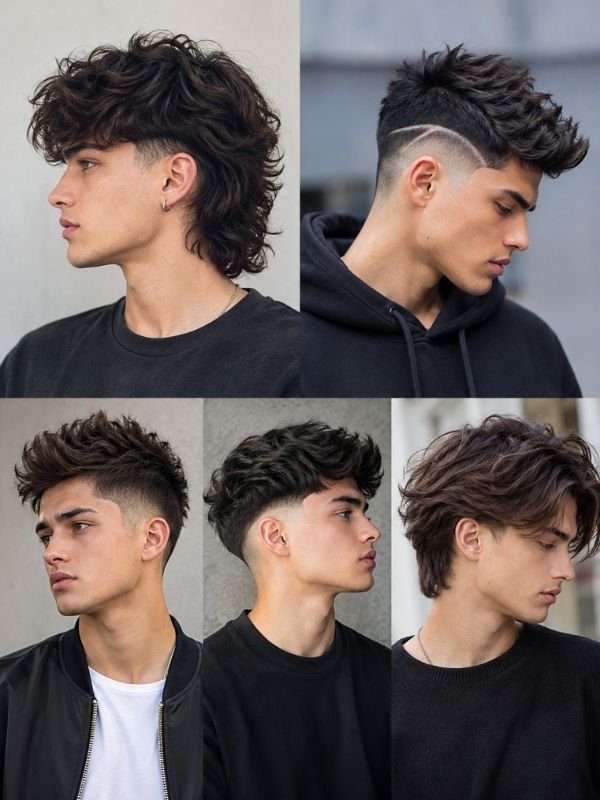
- Low Taper Mullet — short sides, long back, retro-modern
- Low Taper Long Top Fade with Design — added line or shape details
- Low Taper Faux Hawk — length styled upward at the center
- Low Taper Disconnected Top — a bolder contrast between top and sides
- Low Taper with Long Layers — movement-focused cut
Business & Professional Styles
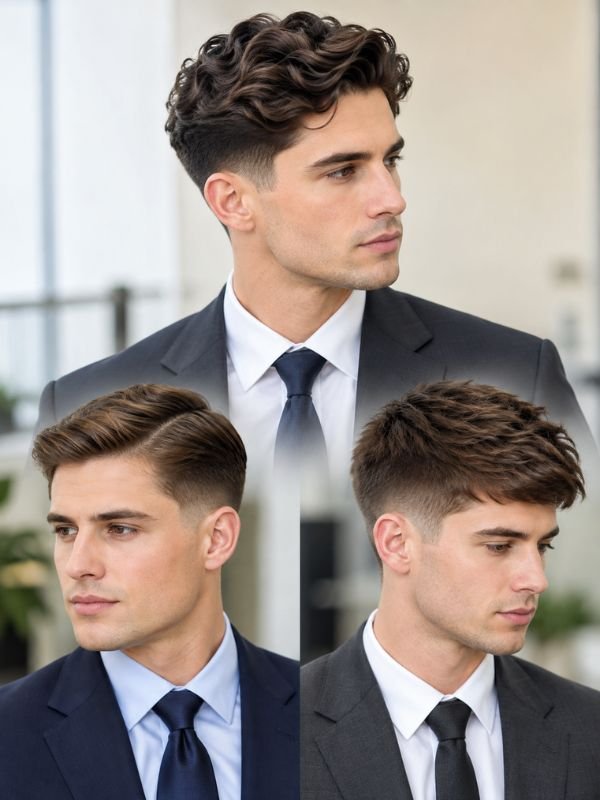
- Low Taper Executive Cut — clean, structured, corporate-friendly
- Low Taper Ivy League — classic length on top, tapered sides
- Low Taper Brushed Forward — subtle, modern professional look
Beard-Paired Styles
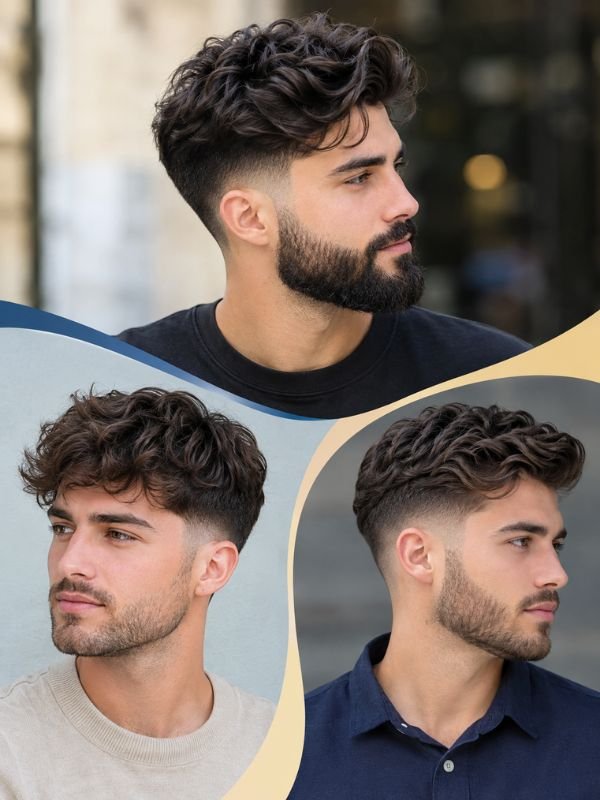
- Low Taper with Full Beard — balanced, masculine combo
- Low Taper with Stubble — casual and low-effort
- Low Taper with Faded Beard — cohesive, blended grooming
Statement Styles
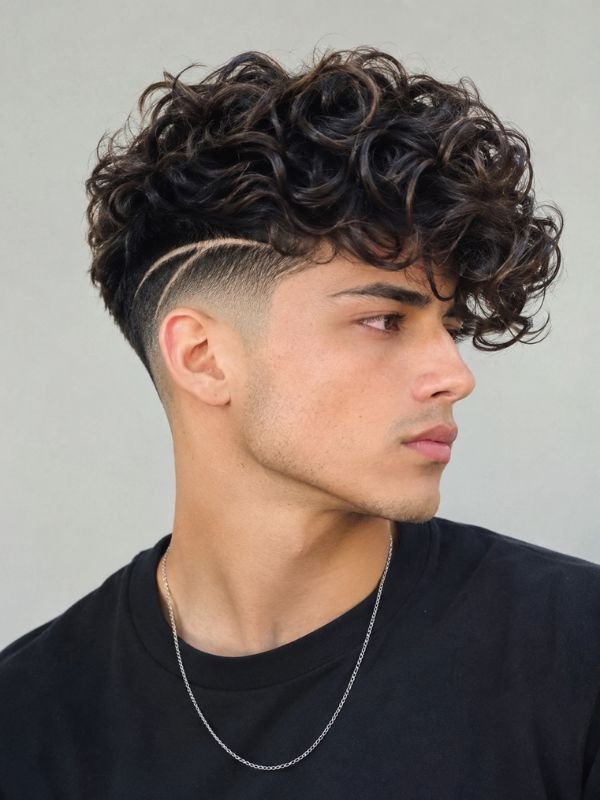
- Low Taper with Undercut Design and Long Curls — bold, high-fashion look
Each of these can be adjusted for thickness, density, and personal styling preference. The key thread connecting all 35 is the same: a subtle, low fade that lets the top of your hair do the talking.
Which Low Taper Fade Long Hair Style Suits Your Face Shape?
Choosing the right variation of this cut comes down to understanding your face shape and what kind of volume or line placement will balance it.
| Face Shape | Best Low Taper Styles | Why It Works |
|---|---|---|
| Round | Pompadour, faux hawk, textured fringe | Adds height and elongates the face |
| Square | Curly fringe, side part, brushed-back waves | Softens strong jawlines with texture |
| Oval | Almost any style, including slicked-back and man bun | Balanced proportions suit most cuts |
| Long/Rectangular | Fringe styles, curtain bangs, wolf cut | Adds width visually, breaks up length |
| Heart | Side-swept fringe, textured crop | Balances a wider forehead with narrower chin |
| Diamond | Curly shag, messy wave crop | Softens angular cheekbones |
If you’re unsure of your face shape, a simple trick is to look in the mirror and trace the outline of your face on the glass with a dry-erase marker or your finger — most faces fall into one of the categories above, sometimes as a blend of two.
How Does the Low Taper Fade Work for Different Hair Types?
Not all hair behaves the same way, and the low taper fade needs to be adapted slightly depending on your natural texture.
Straight hair tends to fall flat, so a low taper with straight hair often benefits from added layers on top to create movement, plus a texturizing product to prevent a flat, helmet-like appearance.
Wavy hair is arguably the easiest texture to work with for this cut. The natural wave adds body without extra styling effort, and a sea salt spray can enhance definition.
Curly hair thrives with this cut because the low fade keeps things neat while the curls on top get room to bounce and shape naturally. A curl-defining cream or gel is essential here.
Coily hair works beautifully with a low taper fade, especially in afro, twist-out, or coil-crop variations. Moisture is key — a leave-in conditioner should be part of the daily routine.
Here’s a quick comparison table:
| Hair Type | Recommended Length on Top | Key Styling Product |
|---|---|---|
| Straight | 3–5 inches | Matte clay or texture powder |
| Wavy | 4–6 inches | Sea salt spray |
| Curly | 4–7 inches | Curl cream or gel |
| Coily | 4–8 inches | Leave-in conditioner + curl butter |
What Should You Tell Your Barber for a Long-Hair Low-Taper Fade?
Communication with your barber makes or breaks this haircut. Here’s exactly what to say, broken into simple steps.
- Specify the fade placement. Say: “I want a low taper fade, starting about an inch above my ear, not a mid or high fade.”
- Give a clipper guard number. Most low tapers start around a #1 or #0.5 at the base, blending up to a #3 or #4 near the top of the fade zone.
- Describe the length you want on top. Bring a reference photo if possible — “leave at least 4 inches on top” is clearer than “keep it long.”
- Mention your hair type. Tell your barber if you have curly, wavy, or coily hair so they can cut with your natural texture in mind rather than against it.
- Ask about the blend, not just the fade. A good low taper depends on a seamless blend between the short and long sections — ask your barber to “blend it out so there’s no harsh line.”
- Bring reference photos. Even with the best verbal description, a photo removes any ambiguity about how low the fade should sit.
How to Pair a Low Taper Fade Long Hair and a Beard
A well-groomed beard can elevate this haircut significantly, but it needs to be intentional rather than an afterthought.
- Full beard: Pairs best with bulkier, longer top styles like the man bun or curly shag, creating an overall balanced, masculine silhouette.
- Faded beard: Works well when it mirrors the fade on your head, creating a cohesive, blended look from jaw to hairline.
- Stubble: Complements more casual styles like the wolf cut or messy wave crop for a low-effort, laid-back vibe.
- Clean shave: Lets fringe or curtain-style haircuts take center stage without competing visual elements.
The general rule: the bolder your top styling, the simpler your beard should be, and vice versa.
Best Products for Low Taper Fade Long Hair
Maintaining this cut at home requires a small but effective product lineup.
| Product Type | Purpose | Best For |
|---|---|---|
| Texturizing paste/clay | Adds definition without shine | Straight, wavy hair |
| Curl cream | Defines and moisturizes curls | Curly, coily hair |
| Sea salt spray | Enhances natural wave texture | Wavy hair |
| Leave-in conditioner | Prevents dryness, adds softness | Curly, coily hair |
| Light-hold pomade | Slicked or side-part styles | Straight, wavy hair |
| Heat protectant | Prevents damage from styling tools | All hair types using heat tools |
| Beard oil | Keeps facial hair paired with the cut looking sharp | Beard-paired styles |
A good rule of thumb: apply products to damp, not soaking wet, hair for the best distribution and hold.
How to Maintain a Low Taper Fade with Long Hair
Keeping this cut looking sharp between barbershop visits comes down to a consistent routine.
- Schedule touch-ups every 4–6 weeks. Because the fade is low, it grows out more gracefully than a high fade, but it still needs refreshing.
- Wash 2–3 times a week. Overwashing strips natural oils, especially important for curly and coily hair types.
- Deep condition weekly. This keeps longer hair on top soft and manageable, particularly for curl and coil patterns.
- Trim the ends every 8–10 weeks. Even though the top is growing out, split ends still need attention.
- Use a diffuser for curly/wavy hair. This helps maintain curl pattern and definition after washing without excess frizz.
- Brush or comb sides daily. This keeps the fade transition looking clean as it grows.
Common Mistakes to Avoid with a Low Taper Fade Long Hair
Even a great haircut can go wrong with the wrong approach. Watch out for these common pitfalls.
- Skipping reference photos — verbal descriptions alone often lead to miscommunication about fade placement.
- Choosing a barber unfamiliar with your hair type — curly and coily hair require different cutting techniques than straight hair.
- Overusing heavy products — too much pomade or gel can weigh down longer hair and look greasy rather than styled.
- Neglecting the top length while focusing only on the fade — the top needs just as much attention and shaping as the sides.
- Waiting too long between trims — letting the fade grow out completely blurs the line between “low taper” and “just longer hair everywhere.”
- Ignoring face shape — picking a trendy style without considering how it interacts with your features can undercut the whole look.
Is the Low Taper Fade with Long Hair Suitable for Professional Settings?
Yes — this is actually one of the biggest advantages of the cut. Because the fade is subtle and starts low on the head, it reads as polished and clean rather than trendy or edgy, especially when paired with a side part, slicked-back style, or executive cut. Even bolder variations like curly fringes or textured tops can be dialed back for the office simply by using a lighter-hold product and keeping the sides freshly maintained.
The Low Taper Fade Long Hair in 2026: History, Culture & Modern Influence
Taper fades themselves date back decades, rooted in military and barbershop traditions that valued clean, gradual blends over harsh lines. The specific pairing of a low taper with longer top hair, however, has surged over the last several years as menswear and grooming trends shifted toward embracing natural texture rather than uniform shortness.
Cultural influence has played a major role. Athletes wearing flowing, curl-forward styles on the field, musicians sporting shoulder-length cuts with clean sides, and social media grooming content have all normalized the idea that longer hair and sharp grooming aren’t mutually exclusive. In 2026, this style continues to dominate because it represents a broader shift: masculinity in grooming has expanded to include texture, length, and individuality, while still respecting the clean-cut appeal that a good fade provides.
Low Taper Fade vs. Mid Taper Fade with Long Hair: Which Is Better?
Choosing between a low and mid taper often comes down to how much contrast you want between your top and sides.
| Feature | Low Taper Fade | Mid Taper Fade |
|---|---|---|
| Fade starting point | Just above the ear | Mid-way up the side of the head |
| Overall look | Subtle, understated | More noticeable contrast |
| Best for | Conservative or professional settings | Bolder, fashion-forward looks |
| Maintenance frequency | Every 4–6 weeks | Every 3–5 weeks |
| Face shapes it flatters | Most shapes, especially round and oval | Square and angular faces |
| Growing-out appearance | Blends naturally | Shows more visible regrowth line |
Neither is objectively “better” — it depends on your personal style, workplace, and how much contrast you want between the fade and the length on top. If you want something that barely looks like a fade at first glance, go low. If you want people to notice the haircut itself, mid taper offers more visual definition.
Expert Barber Tips for the Perfect Low Taper Fade Long Hair
Professional barbers consistently emphasize a few key principles when cutting this style:
- Cut dry first, then refine wet. Many barbers dry-cut the top to see natural fall and texture before finalizing length.
- Blend in sections, not all at once. A seamless low taper requires multiple passes with different guard lengths rather than one quick pass.
- Work with the grain of curly and coily hair. Cutting against natural curl direction can create uneven results once hair dries and shrinks.
- Check the fade from multiple angles. A fade that looks clean from the front can be uneven at the back — always check with a handheld mirror.
- Don’t over-thin long layers on top. Especially for thick or curly hair, over-thinning can lead to frizz and loss of shape.
- Revisit the line-up. A crisp hairline and neckline finish the cut and make even a subtle low taper look intentional and sharp.
Frequently Asked Questions
How often should I get a low taper fade touched up? Every 4 to 6 weeks, since the low placement grows out more gracefully than higher fades.
Does a low taper fade work with curly hair? Yes, it’s actually one of the best fade styles for curly and coily hair types.
Can I do a low taper fade with long hair at home? The fade itself is best left to a professional, though you can maintain length and styling at home between visits.
What’s the difference between a taper and a fade? A taper gradually shortens hair without reaching skin, while a fade blends down to near-skin length; a “taper fade” combines both techniques.
Is a low taper fade good for thinning hair? Yes, it can create the illusion of fuller hair by adding contrast between the sides and top.
How long does hair need to be for a low taper fade with long top? Generally at least 3 to 4 inches on top to allow for meaningful styling options.
Can women get a low taper fade with long hair? Absolutely — the style has become increasingly popular among women wanting an edgy, low-maintenance look.
Does this haircut suit older men? Yes, especially the classic and professional variations like the side part or executive cut.
What products keep curly hair defined with this cut? A quality curl cream or gel applied to damp hair, followed by air-drying or diffusing.
Is a low taper fade appropriate for job interviews? Yes, particularly slicked-back, side-part, or executive-style variations.
How much does a low taper fade long hair cut typically cost? Prices vary by location and barber experience, generally ranging from a standard men’s cut to a premium styling service fee.
Can I switch from a high fade to a low taper without starting over? Yes, a skilled barber can gradually lower the fade line over a few appointments as hair grows.
Final Takeaways
The low taper fade long hair trend has earned its popularity for good reason: it’s adaptable, low-maintenance, and works across nearly every hair type and face shape. Whether you’re drawn to a polished slicked-back style, a natural curly crop, or a bold wolf cut, the foundation stays the same — a clean, subtle fade at the base that lets longer hair on top become the real style statement.
The key to nailing this cut is communication with your barber, understanding your hair type’s needs, and committing to a simple but consistent maintenance routine. Get those three things right, and you’ve got a haircut that looks sharp on day one and still holds its shape weeks later.

Ethan Parker is a hair and hairstyle writer with 5 years of experience researching haircuts, styling techniques, and hair trends. He shares simple tips, practical guides, and hairstyle ideas to help readers choose looks that suit them. His goal is to make hair care and styling easy to understand for everyone.

1 thought on “Low Taper Fade Long Hair: 35 Best Styles for Every Face Shape & Hair Type”