Looking for a clean, sharp look that never goes out of style? A high taper haircut for men is one of the smartest choices you can make this year. It keeps the sides short and neat, while the top stays full and easy to style.
In this High Taper Haircut for Men: 35 Best Styles, Fades & Expert Guide (2026), we cover everything you need to know before you sit in the barber’s chair. You will find classic cuts, modern fades, and simple ideas for every hair type. Each style is explained in an easy way, so you can pick one with confidence.
A high taper haircut for men works for short, medium, and long hair, and it suits almost every face shape. Whether you want a low-maintenance office look or a bold street style, there is a cut here for you. We also share barber tips, styling tricks, and daily care advice to keep your hair looking fresh.
So if you are ready for a change, keep reading this High Taper Haircut for Men: 35 Best Styles, Fades & Expert Guide (2026) till the end. Save your favorite photos and show them to your barber. Your best haircut is just a few scrolls away.
What Is a High Taper Haircut, and Who Is It Best For?
A high taper haircut is a men’s cut where the hair on the sides and back gets shorter in a smooth gradient, starting high near the temples and crown. The top stays longer, so you get strong contrast without going down to bare skin.
Does that sound bold? It can be, but it doesn’t have to be. Ask for a longer guard at the start of the taper and the look stays soft. Ask for a tight skin taper and it turns sharp and loud.
So who wears it best? Men with thick hair, curly hair, or coarse texture get the biggest win, because the high blend cuts bulk fast. Round faces and square faces also love the extra height it adds.
High Taper Haircut vs High Taper Fade: What’s the Difference?
A taper leaves some length at the hairline and shortens gradually. A fade goes much shorter, often down to skin. A high taper fade mixes both ideas: the blend starts high, and the bottom gets close.
Here’s the confusing part. Plenty of barbers and clients use both words for the same cut. Walk into ten shops and you’ll hear “taper fade” used like one word. 🤷
To avoid a mix-up, describe the result you want:
- Taper: soft, natural, length stays around the ears and neckline.
- Fade: tighter, shows more scalp, looks more dramatic.
- High taper fade: high start point, tight bottom, longer top.
Picture two guys. One works in a bank and wants a cut nobody comments on. The other is a DJ who wants every angle to pop. Same high start point, very different bottoms. Say which guy you are.
Understanding High Taper Placement: Sides, Back & All Around
Placement means where the taper begins and which parts of your head it covers. A high placement starts around the top of the ears or the temples, and it can wrap the sides, the back, or both.
Most guys forget to choose. Your barber can taper just the sides, just the back, or blend all the way around the head. Knowing the difference saves you from a cut you didn’t picture.
Two quick tips before you sit in the chair. Look at your head shape in the mirror, since flat spots and bumps change how a fade sits. And bring a photo showing the exact angle you like from the side and the back.
What Does “High Taper on the Sides” Mean?
It means the sides get shorter in steps starting near the temple line, well above the ear. The sideburns and the area over the ears fade down, while the top keeps its length.
Why do guys ask for it? It cleans up the hair around the ears, and it makes the top look thicker by comparison. If your sides puff out like wings when they grow, this fixes that fast.
Want it softer? Ask for the taper only around the ears and sideburns, leaving the back longer. Want it louder? Ask for a high taper fade with a tight bottom.
What Does “High Taper Back” Look Like?
A high taper back starts the blend higher on the back of the head, near the crown, and shortens down to the nape. The neckline ends up clean, either blocked, rounded, or tapered to a natural point.
This part matters because your barber will see the back and you won’t. A quick photo from behind, or a hand mirror check before you leave, takes ten seconds.
Choosing a tapered neckline means it fades away naturally as it grows out. A blocked neckline looks crisp for a week, then gets ragged. Most men who hate salon visits pick the tapered version.
ALSO READ “Hispanic Low Taper Fade Styles“
Where the High Taper Haircut Came From
The high taper haircut grew out of military-style short back and sides cuts, where tidy sides signaled discipline and speed. Barbers kept the top longer for practicality, and the clean gradient became a signature of the era.
From there, the look moved into neighborhood barbershops. Many barbers point to the 1980s and 1990s, when fades and tapers became a big part of hip-hop and street style. Guys wanted sharper lines, and barbers got better at blending.
Today the high taper haircut shows up everywhere: offices, campuses, gyms, and red carpets. It survived because it solves real problems. It removes bulk, frames the face, and lets the top do the talking.
Trends change, but the basic shape keeps coming back. Every few years, a new top style rides on the same tight sides, and the cut feels brand new again. That’s why barbers call it a classic with a twist.
High Taper vs Other Taper Fades: Complete Comparison
The main difference is the starting point. A low taper begins near the ears and neckline, a mid taper starts around the middle of the sides, and a high taper starts near the temples and crown. Higher start means more contrast.
Here’s the quick view:
| Cut Type | Where It Starts | Best For |
| Low taper | Around the ear and nape | Office looks, subtle change |
| Mid taper | Middle of the sides | Balanced, everyday cuts |
| High taper | Temples and crown | Bold contrast, thick or curly hair |
Still unsure? Think about your dress code, your hair thickness, and how often you can visit a barber. Those three answers usually point to one height.
High Taper vs Low Taper Fade
A low taper fade stays near the ears and the back of the neck. It’s the polite option. The sides keep more length, and the cut grows out gracefully over three or four weeks.
A high taper removes far more hair from the sides. Your head looks more shaped, and the top looks fuller. The trade-off is upkeep, since the sharp lines soften faster.
Pick low if your boss reads hairstyles like headlines. Pick high if you want people to notice the shape.
High Taper vs Mid Taper Fade
A mid taper sits right between the two. It starts around the middle of the sides, so it feels safe but not boring. Plenty of barbers call it the “goldilocks” cut.
If you’ve never had a taper, start with mid. You can always move the line higher next visit once you know you like it.
Already know you like contrast? Skip the test drive and go high. Your barber can walk you through it.
High Taper vs High Fade (Skin Fade)
A high fade, also called a skin fade, goes all the way down to bare skin and starts high on the head. A high taper usually leaves a hint of length at the bottom.
That single detail changes the vibe. The skin version looks very sharp, and it shows every bump and scar on your scalp. The taper version hides those and grows out kinder.
So which one wins? If you want low fuss, take the taper. If you want a head-turning contrast, take the fade.
35 Best High Taper Haircut Styles for Men (2026)
These 35 styles mix a high taper with different tops, from clean and classic to loose and messy. Pick by hair length and hair type first, then match the look to your daily life. Each one below tells you what it is and who it fits.
Read them like a menu. Don’t try to memorize all 35. Save two or three you like, and show your barber a photo.
Classic High Taper with Side Part
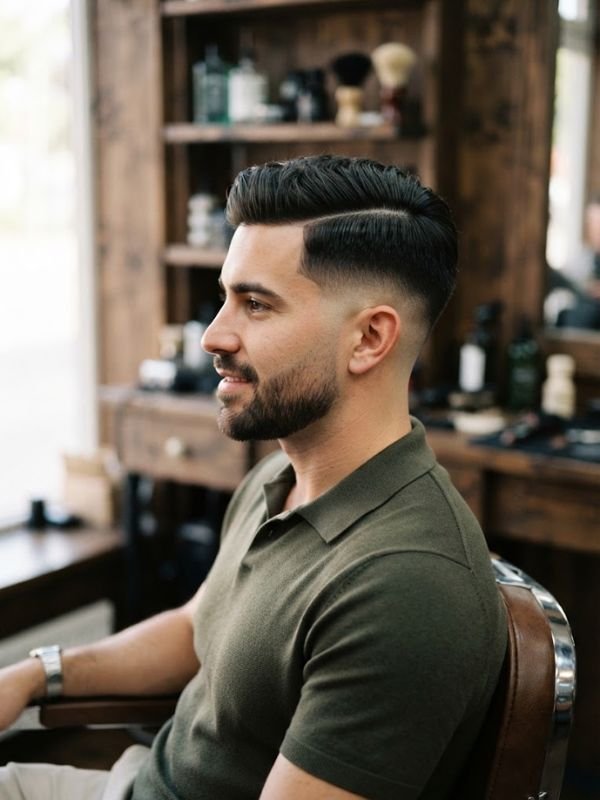
A neat part on one side with tight tapered sides. It looks tidy at work and sharp at weddings. Great for straight hair.
High Taper with Textured Fringe
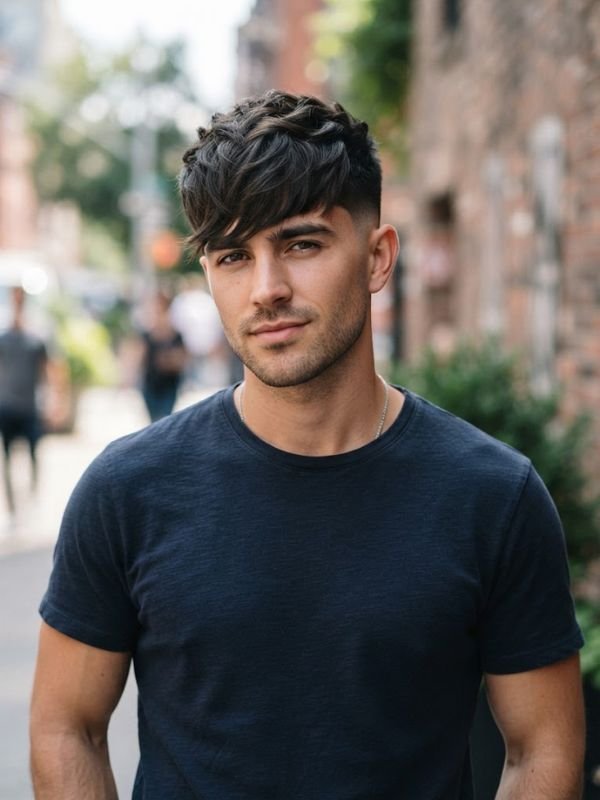
A choppy front falls forward over the forehead. Add matte clay for that lived-in look. It hides a receding hairline well.
High Taper Slick Back

Hair combed back and held with pomade. The high taper keeps the sides slim, so the top looks polished instead of heavy.
High Taper Comb Over
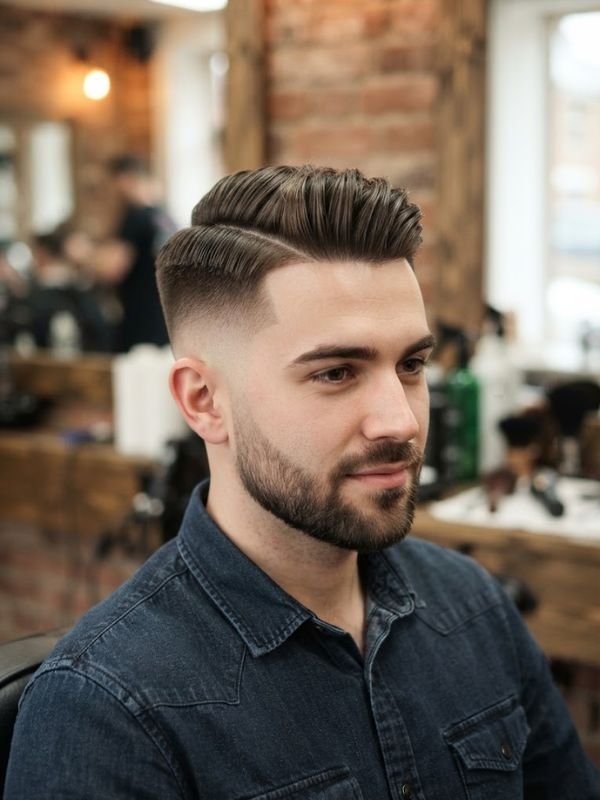
A defined side part with a blow-dried lift. Timeless, and it works for guys who want a suit-friendly cut.
High Taper Quiff
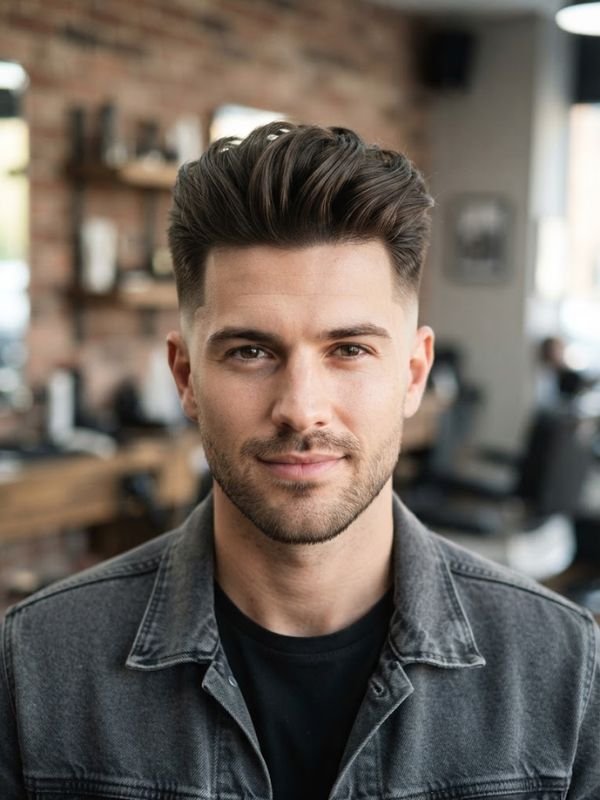
Front hair lifts up and back for height. Use a blow dryer and a light styling cream. It adds length to round faces.
High Taper Pompadour
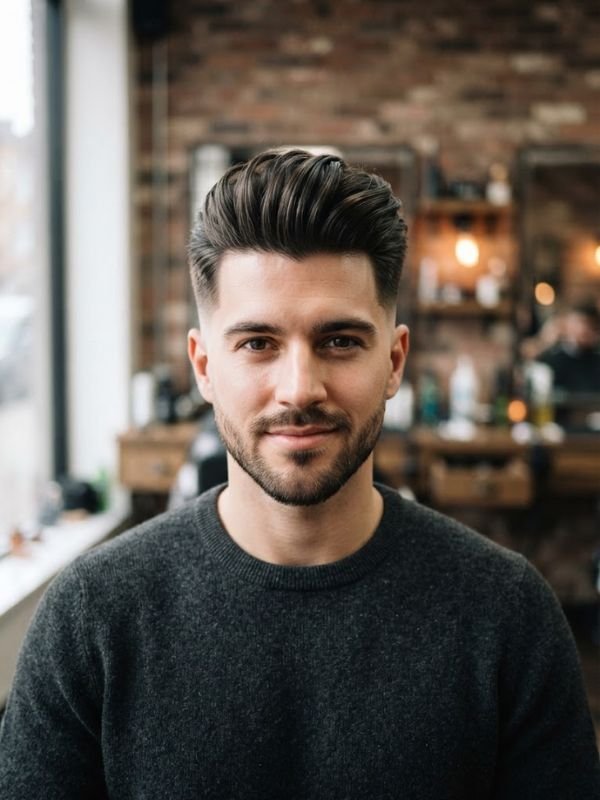
Big volume up front, tight sides below. It takes patience to style, but the shape is unmistakable.
High Taper Messy Crop

Short, choppy, and forgiving. Rub in texture powder, shake it out, and leave. Perfect for guys who hate mirrors.
High Taper French Crop
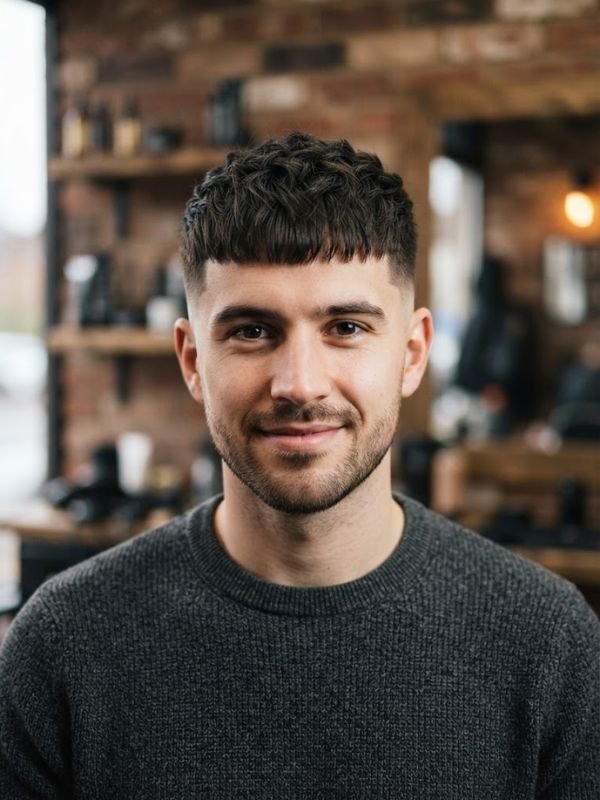
A short blunt fringe cut straight across the forehead. It suits thick, straight hair and gives a clean, boyish edge.
High Taper Spiky Top
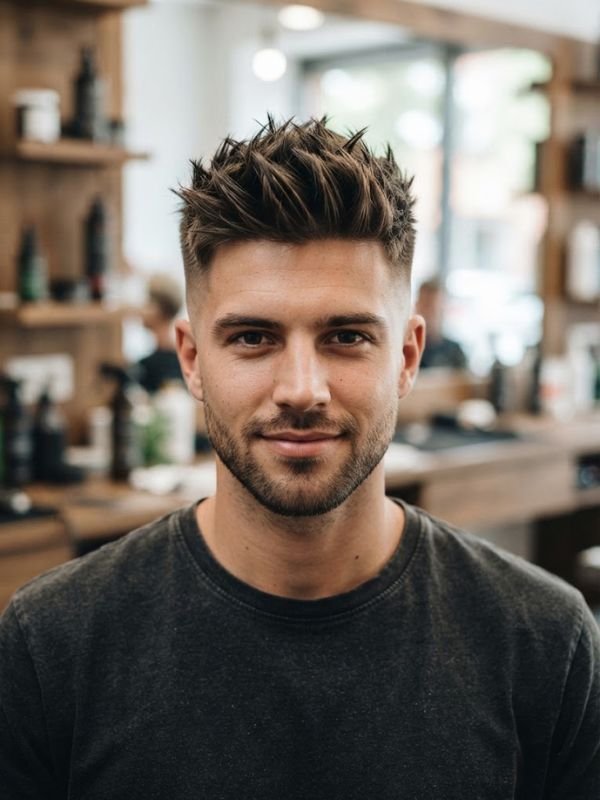
Short spikes with hair wax. It’s playful, and the high taper stops the sides from looking bulky.
High Taper Ivy League

A slightly longer crop that can be parted or brushed to the side. It’s the college-town classic with tighter sides.
High Taper Faux Hawk
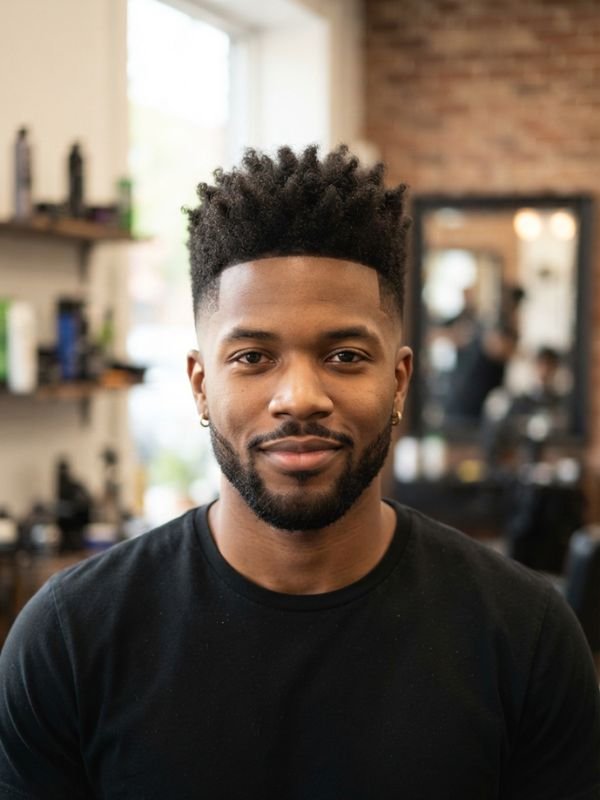
The center rises while the sides stay tight. It’s loud without needing a full mohawk.
High Taper Blowout
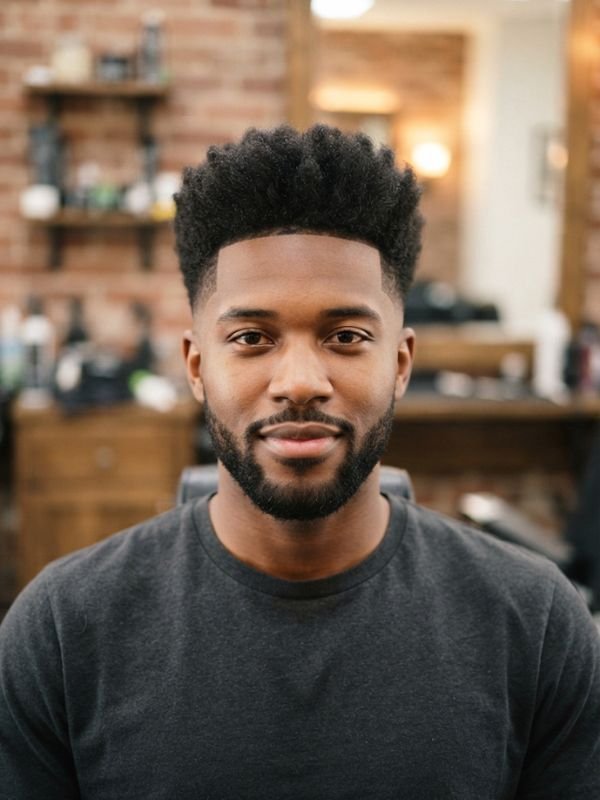
Full, airy top dried up and back for volume. It’s a big trend for thick hair, and it looks great with tight sides.
High Taper with Short Buzz Top
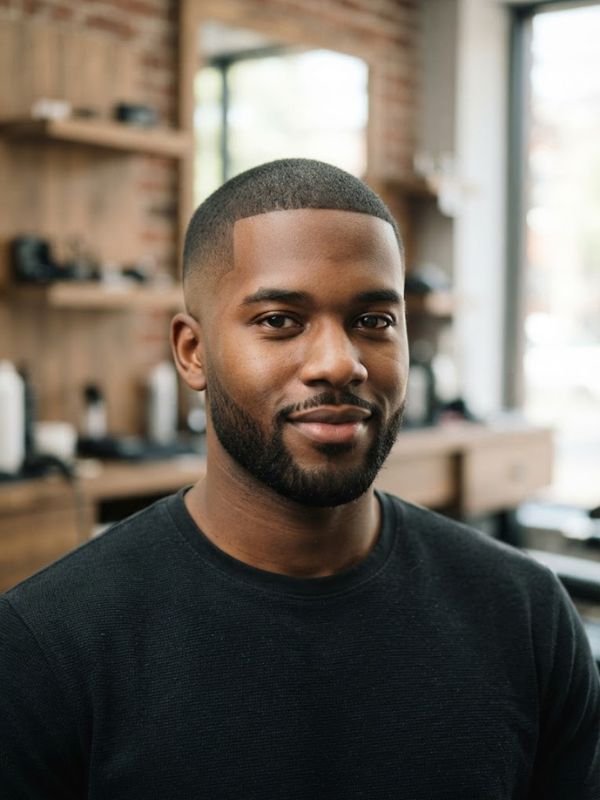
A buzz cut on top, fading into skin or near skin below. It’s the lowest maintenance option on this list.
High Taper with Long Flow

Long top hair falling to the ears or past them, with clean tapered sides. Bold, and easier to tie back than a full shaggy cut.
High Taper Man Bun

The taper trims the bulk around the ears so a man bun or top knot sits clean. It’s popular with guys growing their length.
High Taper Hard Part
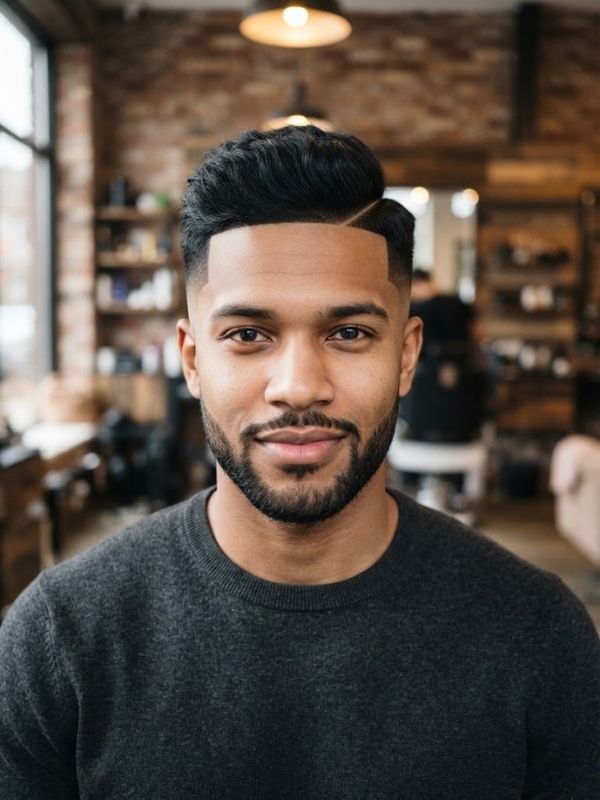
A shaved line marks the part, then the top is combed sharp. Expect a strong edge and a barber who knows line work.
High Skin Taper
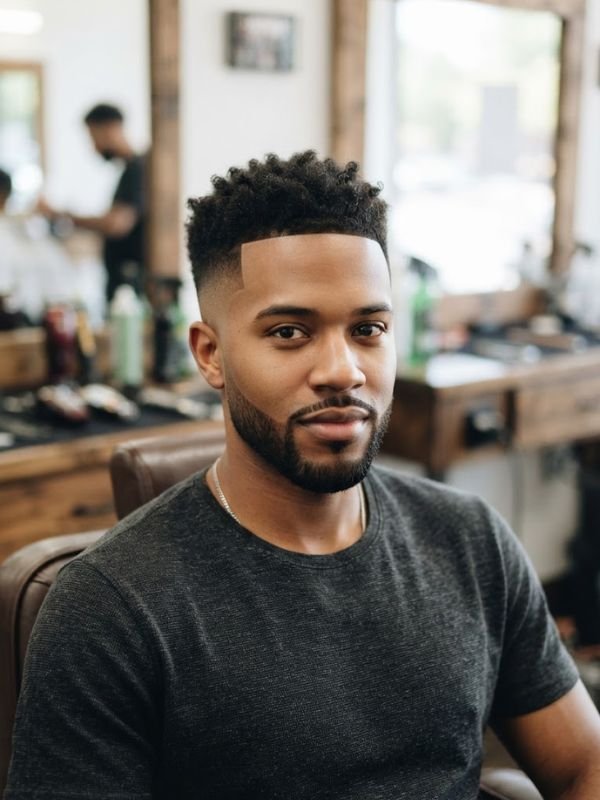
The bottom goes to skin for a crisp base. It looks fresh on day one and needs a visit every two weeks.
High Taper with Beard Fade

The sideburn area blends straight into the beard, so face and head look connected. A great pick for full beards.
High Taper with Line Up
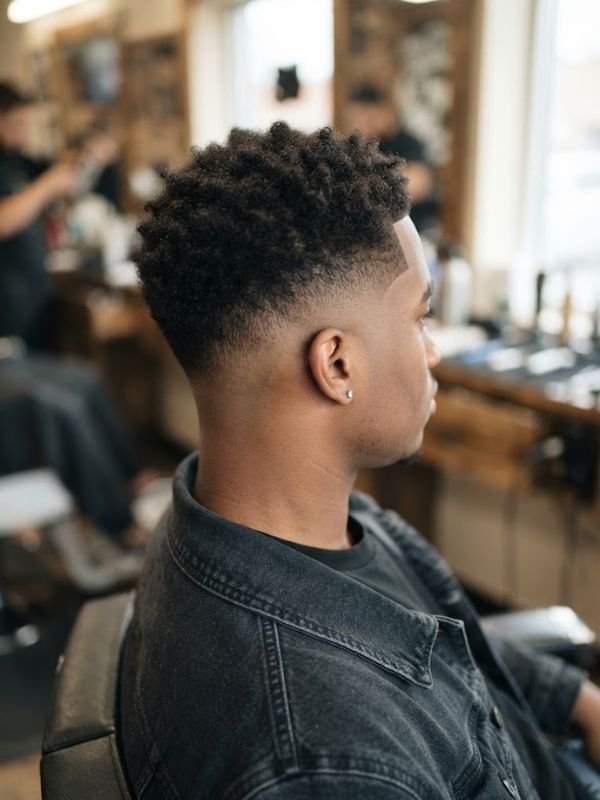
Sharp edges at the forehead and temples. The line up frames the face and makes any top look tidy.
High Taper Wavy Sweep

Natural waves brushed to the side. The taper removes side puff, so the waves get the spotlight.
High Taper Curtain Fringe

A center part with hair falling on both sides. It’s a softer, relaxed look that works well on medium length.
High Taper Thick Textured Top
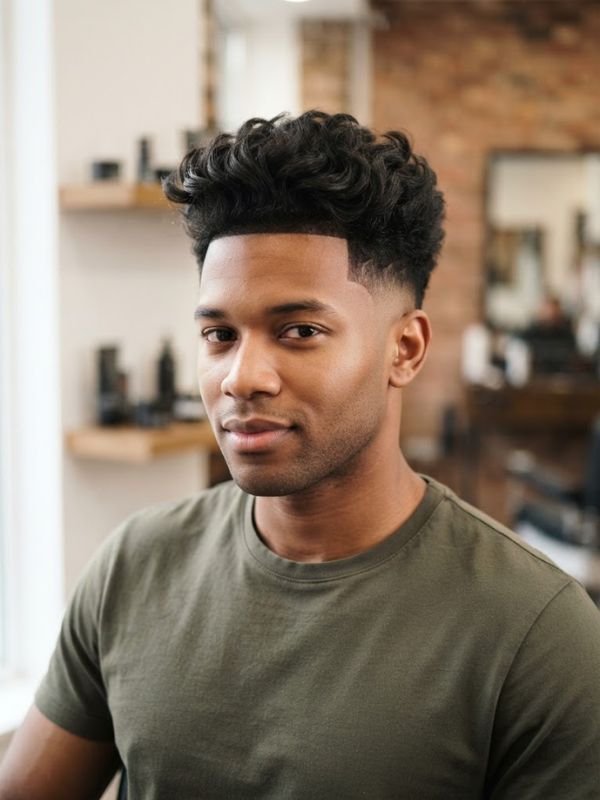
Long layers with plenty of body. Thin the top only a little, so the texture stays full.
High Taper Undercut Blend
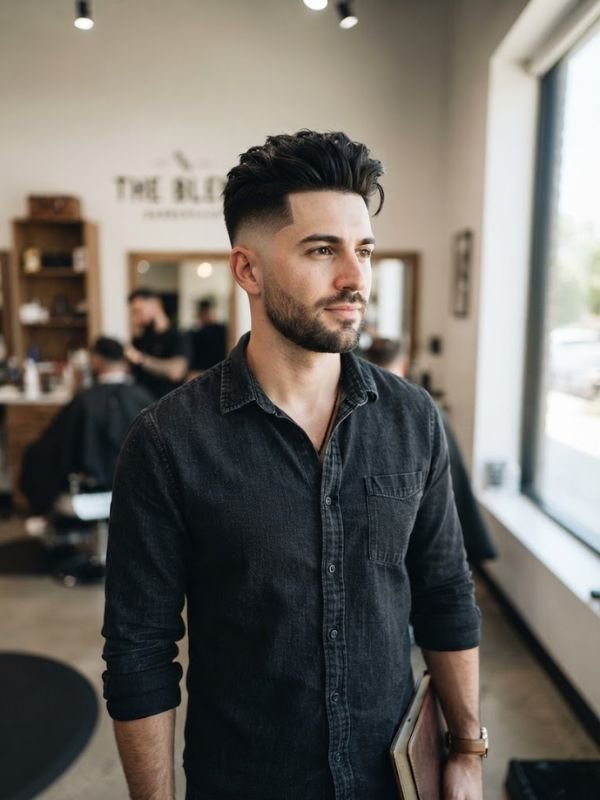
A disconnected top over shorter sides, with a slight blend. It reads edgy and suits guys who like contrast.
A fringe cut straight across, worn flat or lightly tousled. It looks calm and clean.
High Taper Short Mullet

A shorter, tidy mullet with tapered sides and a longer back. It’s trendy, and the taper keeps it from looking messy.
High Taper for Gray Hair
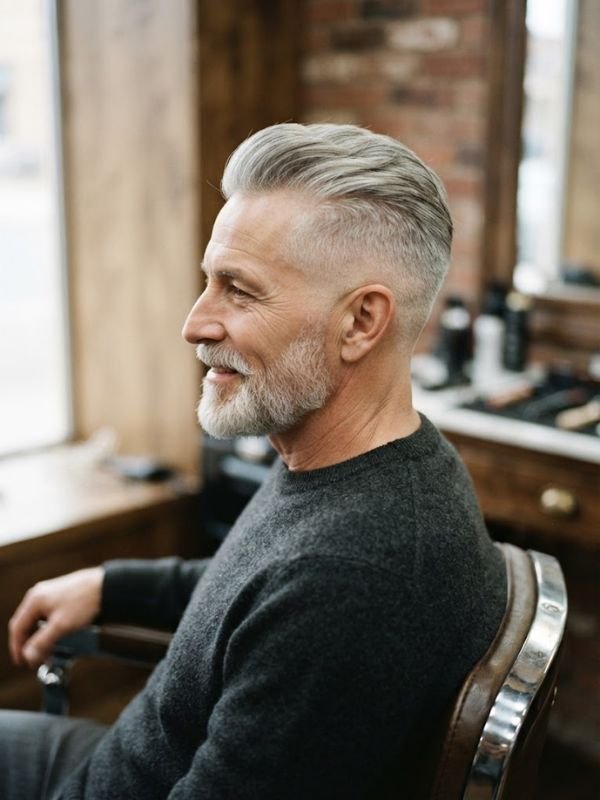
A short, clean top for silver hair, with a high taper for a fresh shape. It looks distinguished and takes little effort.
High Taper for Thinning Hair
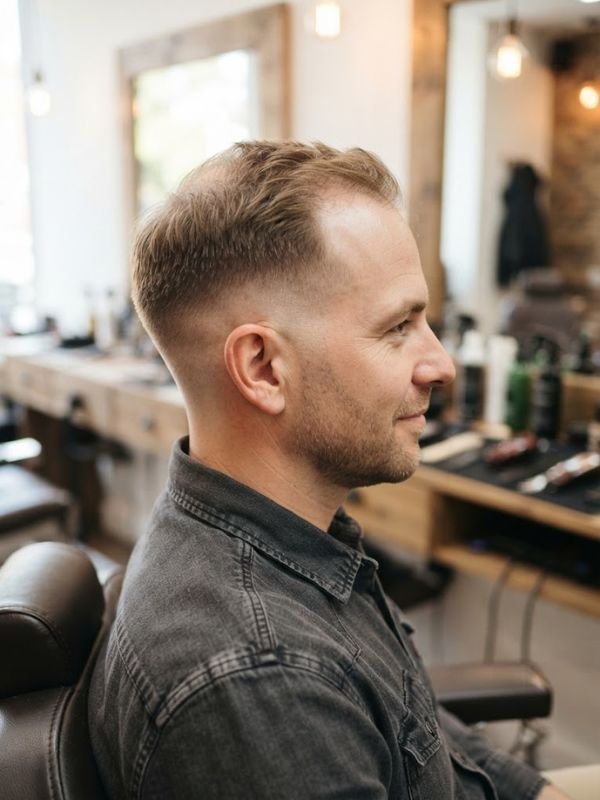
Keep the top medium and use a light powder for volume. The tight sides make the crown look thicker.
High Taper Styles for Curly & Coily Hair
Curly and coily hair loves a high taper. The tight sides remove bulk, and the top keeps its natural bounce. Barbers say it makes shape and definition far easier to hold.
Here are the eight curl-friendly versions:
High Taper with Curly Top
Loose curls on top, cleaned sides. Add a curl cream and let it air dry.
High Taper with Twists
Two-strand twists on top with a tight base. It gives strong definition with easy daily care.
High Taper with Sponge Twists

A twist sponge creates coils on top. Pair it with a sharp taper for a crisp, clean pattern.
High Taper with Curly Fringe
Curls fall onto the forehead. A slightly longer top helps the fringe hold its shape.
High Taper with Short Afro

A rounded afro shaped evenly, with a high taper for a neat outline. Use a pick comb for volume.
High Taper with Curly Hard Part
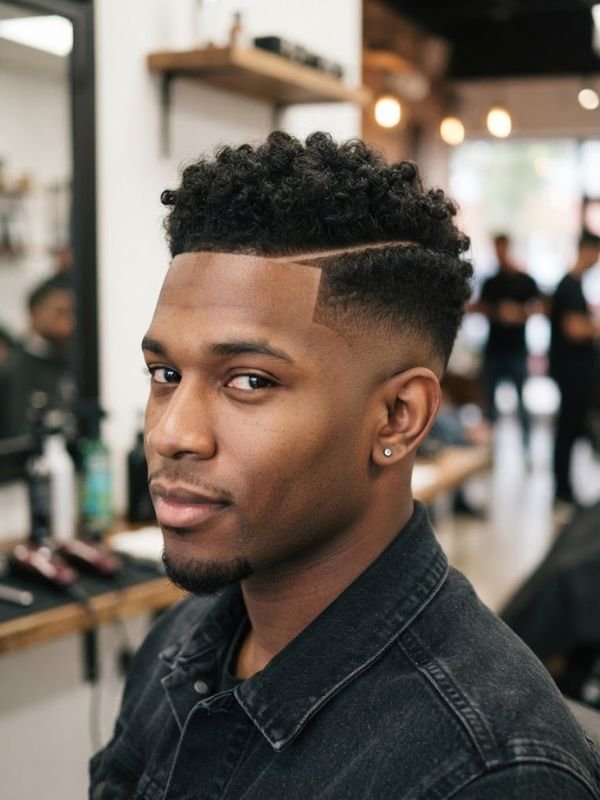
A shaved part cuts through curly hair. It’s a small detail with a big payoff.
High Taper with Locs

Locs on top with a clean taper around the sides and back. Retwist every few weeks to keep it tidy.
High Taper with Curly Mohawk
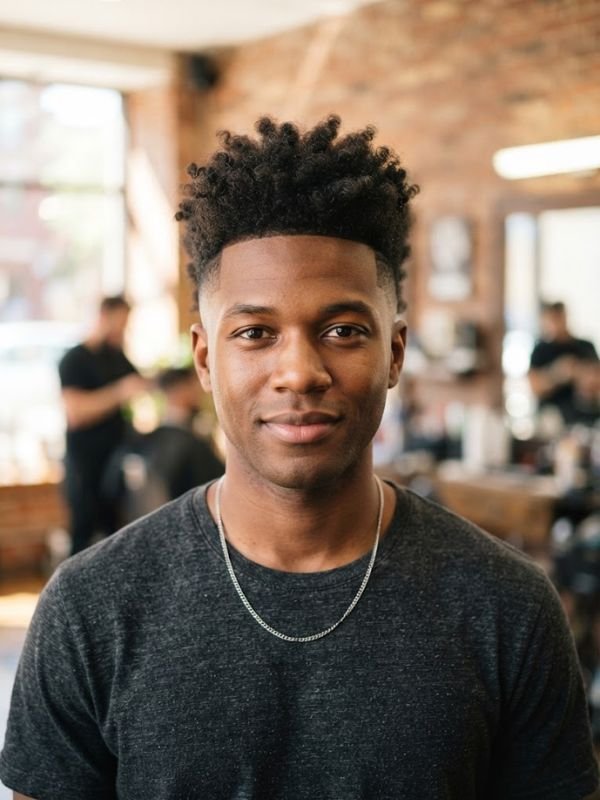
Curls stand tall in the center while the sides fade tight. It’s a statement cut and a photo magnet.
What’s Trending in High Taper Haircuts for 2026
Textured fringes, blowouts, and curly tops lead the pack right now. Guys want more movement on top, with tight and tidy sides to keep the whole shape clean. Soft, lived-in looks are winning over stiff, heavy-product styles.
Longer tops are also making a comeback. Instead of a short crop, more men grow the front out and let it fall naturally. The high taper keeps that length looking planned instead of shaggy.
Another shift is the softer fade. Fewer people ask for a harsh skin line, and more ask for a taper that blends smoothly and grows out gracefully. It’s easier on the schedule and easier on the wallet.
Watch social media for ideas, but filter them. A trend only works if it suits your hair and your week. Save what you love, then ask your barber how to make it fit.
Pros and Cons of a High Taper Haircut
A high taper haircut is sharp, versatile, and easy to style, but it needs regular visits. Knowing both sides helps you decide before you sit in the chair.
Pros:
- Adds height and shape to round or square faces.
- Removes bulk from thick and curly hair.
- Pairs with almost any top style and beard.
- Cuts daily styling time, since the sides need nothing.
- Looks clean at work and at play.
Cons:
- Needs a trim every two to four weeks to stay sharp.
- Shows scalp bumps and scars on skin-close versions.
- Feels bold for very conservative dress codes.
- Can look thin on the sides if your hair is fine and sparse.
Weigh those honestly. If the pros match your life, go for it. If two or three cons worry you, start with a mid taper and move higher later.
How to Choose the Right High Taper Haircut for You
Start with three things: your hair type, your face shape, and your daily routine. Match those, and the right style almost picks itself. Skip them, and you’ll spend weeks fighting your own hair.
Ask yourself real questions. Does my hair curl when it grows? Do I have ten minutes each morning, or two? Will my job frown on tight sides? Your honest answers beat any trend list.
Here’s a simple guide by hair type:
- Straight hair: Go for the side part, comb over, or slick back. Straight hair shows clean lines best.
- Wavy hair: Try the textured fringe or wavy sweep. The taper keeps waves from puffing sideways.
- Curly hair: Pick a curly top, twists, or a short afro.
- Thick hair: A high blend cuts weight fast and keeps things tidy.
- Thin hair: Keep the top medium and skip very tight skin fades.
Which Face Shape Suits a High Taper Best?
Most face shapes work, but the top style changes the result. Round and square faces gain the most, because the high taper adds height and shapes the sides. Oval faces can wear almost anything.
Use this table as a starting point:
| Face Shape | Best Top Style | Why It Works |
| Round | Quiff, pompadour, faux hawk | Adds height and makes the face look longer |
| Square | Textured fringe, side part | Softens strong jaw lines |
| Oval | Slick back, crop, curly top | Balanced shape suits nearly everything |
| Heart | Fringe, curtain top | Balances a wide forehead |
| Long or rectangular | Short crop, fringe | Avoids adding more height |
Tip: hold a photo of your favorite cut next to your reflection. If the proportions look close, you’re on the right track.
How to Ask Your Barber for a High Taper Haircut
Say the height, the top length, and the neckline. That’s the whole script. A line like “high taper on the sides and back, two inches on top, tapered neckline” gives a barber everything.
Many men get nervous here. What if I use the wrong word? Relax. Barbers hear vague requests all day, and a clear photo plus three details will beat any fancy vocabulary.
Try this quick checklist:
- Show a photo from the front, side, and back.
- Say “high taper” and name the clipper guard you want at the bottom.
- State the top length in inches or with your fingers.
- Choose a tapered or blocked neckline.
- Mention if you want a line up or beard blend.
The Golden Rule of Barber Communication
The golden rule: never say “just a taper.” That phrase leaves too much to guess. Barbers fill the gaps with their own habits, and their habits may not match your head.
Instead, use specifics. “High taper, guard 1 at the bottom, blend into the top” tells the story. If you’re unsure, ask the barber what they’d recommend for your hair type and your work. Good barbers love that question. 🙌
And if something looks off, speak up before they finish. It’s far easier to adjust mid-cut than to fix a shape after it’s gone.
Clipper Guard Numbers Explained: High Taper Edition
Guard numbers tell you how long the hair stays after clipping. A number 1 leaves about one eighth of an inch, and a number 4 leaves half an inch. Bigger number means longer hair.
Your barber will likely start with a low number at the bottom of the taper and move up as they blend into the top. Here’s a quick reference:
| Guard Number | Length Left | Where It’s Used |
| 0 (no guard) | Bare blade, near skin | Bottom of a skin taper |
| 1 | 1/8 inch (3 mm) | Tight bottom of a taper |
| 2 | 1/4 inch (6 mm) | Standard bottom for a soft look |
| 3 | 3/8 inch (10 mm) | Mid blend zone |
| 4 | 1/2 inch (13 mm) | Upper blend zone |
| 6 | 3/4 inch (19 mm) | Short top or blend into length |
Don’t stress over memorizing this. Say “guard 1 at the bottom” and let your barber handle the blending.
How to Style a High Taper Haircut at Home
Wash, dry, apply a small amount of product, and shape. That’s it. The best part of a high taper haircut is how little work the sides need, so your styling time goes to the top only.
Want a look that lasts all day? Match the product to your hair type. Matte clay suits thick hair, sea salt spray suits waves, curl cream suits curls, and light pomade suits slick styles.
Bonus tip: less is more. Start with a pea-sized amount. You can always add, but scraping product out of your hair with a comb is a bad morning.
4-Step Daily Styling Process
- Start with clean, damp hair. Shampoo, condition, then towel dry. Don’t rub hard, since that causes frizz.
- Blow dry for shape. Use medium heat and push the hair in the direction you want it to sit. For a fringe, dry it forward.
- Add product. Warm a pea-sized amount in your palms, then work it through from roots to tips.
- Finish the shape. Use your fingers or a comb, then a light hairspray or texture powder for hold.
Total time: about five minutes once you get the rhythm. 🕔
Is a High Taper Haircut Work and School Friendly?
Yes, in most cases. A high taper haircut can look calm or loud depending on the guard at the bottom and the length on top. Choose a longer guard and a neat side part, and it fits nearly any dress code.
Worried about a strict office? Ask for a soft taper, keep the top around two inches, and skip the hard part. Your coworkers will see a tidy man, not a statement cut.
Here’s how the cut adapts by setting:
- Office and corporate: Side part or comb over, soft taper, tapered neckline.
- School and campus: Textured fringe, crop, or curly top. Easy to style in five minutes.
- Formal events: Slick back with pomade, clean line up, fresh neckline the day before.
- Casual weekends: Messy crop, curly mohawk, or a long flow on top.
- Creative jobs: Hard part, faux hawk, or a high skin taper for extra edge.
Picture a job interview on Friday. Get the cut on Wednesday, not Friday morning. That gives the neckline a day to settle and lets you fix any small thing before you walk in.
Cost, Time, and Should You DIY a High Taper Haircut?
Prices change by city and shop, so ask before you sit down. It usually costs about the same as a regular fade, and some shops add a small fee for beard work or a line up. Chair time runs about 30 to 45 minutes.
Should you try it at home? I’d say no for the fade itself. Blending is a skill, and one wrong pass with clippers leaves a visible gap. Save the DIY for the neckline and the top.
If you still want to try, here’s a safer plan:
- Start with a guard 4 or higher, never lower.
- Work slowly, moving the clippers up in small flicks.
- Use two mirrors so you can see the back.
- Stop early. You can always cut more, but you can’t glue it back.
Think about cost per week, not per cut. If you visit every three weeks and it keeps you sharp, that’s a small price for a head that looks fresh every morning.
How to Find a Barber Who Nails a High Taper Haircut
Look for photos of tapers and fades on their page, then book a short chat. A barber who blends well will show clean transitions with no harsh lines. Check the back of the head in the photos, since that’s where mistakes hide.
Read reviews too, but don’t stop there. Ask a friend with a great cut where they go. A personal tip beats a five-star average most days.
On your first visit, arrive a few minutes early and talk through the plan. Bring your photos, describe your hair routine, and be honest about how much time you spend on it.
Good signs include:
- They ask questions about your hair type and lifestyle.
- They check your head shape before they start.
- They show you the back with a hand mirror.
- They offer to adjust anything you don’t like.
Found a good one? Stick with them. A barber who knows your head is worth more than any product on the shelf. 💈
High Taper Haircut for Gym, Sports, and Hot Weather
A high taper haircut suits active guys well, because the short sides stay cool and don’t trap sweat. The top can be tied back, pushed up, or tucked under a cap without a fight.
Hot climate? The tight sides keep your neck and ears breezy, and the shorter length dries fast after a workout. If you swim, rinse your hair afterwards, since chlorine dries the top.
Under a cap or helmet, your top hair flattens. Pick a style with some texture, so a quick shake or a bit of texture powder brings it back. A short crop or a curly top bounces back better than a pompadour.
Sweaty hair also needs a fresh wash more often. Use a gentle shampoo so the scalp doesn’t dry out under those tight sides.
How to Maintain a High Taper Haircut
Keep it sharp with regular barber visits, a tidy home routine, and a little patience while it grows. A high taper haircut looks its best in the first two weeks, then softens as the sides fill in.
Why does it fade so fast? Because the contrast is the whole point. When the sides grow just a few millimeters, the gap between the tight bottom and the longer top shrinks, and the shape blurs.
Good news: upkeep is simple once you know the rhythm. Here’s how to plan it.
Barber Visit Frequency
Most men book every two to three weeks. Skin tapers need visits closer to two weeks, while softer tapers with a longer guard can stretch to four. Your hair growth speed decides the rest.
Not sure? Watch your neckline. When the edges look fuzzy and the sides start to puff, it’s time.
Save your barber’s number and rebook before you leave the chair. It’s the easiest way to stay on schedule.
Key Facts:
- Skin taper: visit every 2 weeks.
- Soft taper with a longer guard: every 3 to 4 weeks.
- Thick or fast-growing hair: shorter gaps between visits.
- Line up only: a quick touch up between full cuts.
- Costs less over time, since sides need little styling.
At-Home Maintenance Between Cuts
Between visits, wash regularly, condition the top, and use a beard trimmer or a small edger carefully on the neckline only. Never try to fade your own sides with clippers unless you’ve practiced.
Moisturize your scalp if it feels dry, since tight sides show flakes faster. A light scalp oil helps, and so does a good moisturizing shampoo.
Sleep matters too. A satin pillowcase cuts friction and keeps curls and waves neat overnight. Small habit, big payoff. 😴
What to Do If Your Taper Grows Out
Don’t panic. Grown out tapers still look decent for a while, and you have options. Ask for a quick clean up around the sides and neckline, or move to a mid taper for a softer look.
If you’re growing your hair long, this is the easy path. Let the sides fill in while the barber keeps the neckline neat. The awkward stage lasts about a month, then it blends into a shorter, rounder shape.
Want a fresh start? Ask for the same cut again, and take a new photo of how you look on day one.
Growth Timeline: What Your Taper Looks Like Week by Week
Your taper changes every week, and knowing the stages helps you time your next visit. Most men see the sharpest look in the first fourteen days, then a slow softening until the shape fades away.
Here’s the rough path:
- Days 1 to 7: Crisp lines, tight sides, neckline clean. This is your best week for photos. 📸
- Days 8 to 14: Edges start to fuzz slightly. The blend still looks smooth, and the top settles into place.
- Days 15 to 21: The sides fill in and the contrast drops. Book your next visit now if you like a sharp finish.
- Days 22 to 28: The taper looks rounded, and the neckline grows ragged. Soft tapers still pass here.
- Week 5 and beyond: The shape is mostly gone. Expect a full reset at your next cut.
Hair grows at different speeds, so treat these as guideposts, not rules. Thick, dark hair shows growth faster than fine, light hair.
Keep a note on your phone with the date of each cut. After two or three visits, you’ll spot your own pattern and stop guessing.
Quick Barber Cheat Sheet: Scripts You Can Copy
Not sure what to say? Copy one of these lines, change the numbers, and you’re set. Each one names the height, the bottom, the top, and the neckline.
- Soft office look: “High taper on the sides and back, guard 2 at the bottom, two inches on top, tapered neckline.”
- Sharp and bold: “High skin taper, blend into the top, side part, clean line up.”
- Curly top: “High taper with a tight bottom, keep the curls long on top, tidy the edges.”
- Beard blend: “High taper that fades into my beard, keep the beard full, clean the neckline.”
- Low effort: “High taper haircut with a longer guard so it grows out slowly.”
Read your choice out loud once before the visit. It sounds silly, but it helps you say it clearly. And keep a photo on your phone as backup. 📱
Best Hair Products for High Taper Haircuts
Pick products by hair type and finish. Matte clay gives hold without shine, pomade gives polish, sea salt spray gives texture, and curl cream keeps waves and curls soft.
Don’t buy ten jars. Two or three do the job, and you’ll save money.
Styling Products
- Matte clay: Strong hold, no shine. Best for textured fringes and thick hair.
- Texture powder: Adds lift and grip. Perfect for thin hair or a messy crop.
- Pomade: Smooth, glossy control for slick backs and side parts.
- Sea salt spray: Beachy texture for wavy hair.
- Curl cream: Defines curls and fights frizz.
- Hairspray: A light mist locks in a quiff or pompadour.
Hair Care Products
- Shampoo: Choose a gentle formula for daily or every-other-day washing.
- Conditioner: Keeps the top soft and manageable.
- Leave-in conditioner: Great for curls and coils.
- Scalp oil or serum: Helps dry skin under tight sides.
- Wide-tooth comb or pick: Shapes curls without pulling them apart.
Common High Taper Mistakes to Skip
The biggest mistake is going too tight without thinking about your head shape. A very high skin fade can show bumps and scars, and it makes some faces look narrow. Ask your barber to check before they start.
Another slip is picking a top that fights your hair. Slick back hair is a struggle if you have tight curls. Choose a top that follows your natural texture.
And then there’s the timing mistake. Waiting six weeks between visits ruins the shape. Book early, and keep your calendar honest.
Personalization Tips: Make Your High Taper Yours
Small tweaks turn a regular cut into your signature look. Change the top length, the part, the neckline, or add a design or hard part. Even a slight change in the taper height shifts the whole vibe.
Try these ideas:
- Add a sharp part line for a bolder edge.
- Try a soft tapered neckline if you dislike regular visits.
- Grow the top longer over a few months and watch the shape change.
- Blend the taper into a beard for a connected look.
- Pair it with clean glasses or a neat jawline for a sharper overall style.
Take a monthly selfie in the same light. It shows how the cut changes, and it helps you decide what to tweak next time.
More Taper Guides You’ll Love
Curious about related cuts? These guides pair well with this one, so save them for later. 📚
- Low Taper Fringe Haircut Guide: 12 styles, every hair type, and exactly what to tell your barber.
- Blowout Taper for Curly Hair: What to ask your barber and how to style it.
- Blowout Taper Textured Fringe (Low, Mid & High): What to ask for and how to style it.
- High Blowout Taper Haircut Guide: Low vs mid vs high, every hair type.
Last Check Before You Leave the Chair
Take one minute to inspect the cut before you pay. Check the sides in a mirror, look at the back with a hand mirror, and run your fingers over the blend. It should feel smooth, with no steps or patches.
Look at both ears. The lines should match in height, and the sideburns should end at the same point. If one side looks higher, say so now. Barbers fix small things quickly, and most are happy to.
Ask for a styling tip too. A good barber will show you how they’d dry and shape the top, and that ten-second lesson saves you a week of trial and error at home.
Then book your next visit, snap a photo, and enjoy the compliments. You earned them. 😎
Frequently Asked Questions
What is a high taper haircut? It’s a cut where the sides and back shorten gradually, starting high near the temples and crown. The top stays longer for contrast.
Is a high taper the same as a high fade? Not exactly. A taper keeps some length at the bottom, while a fade goes shorter, often to skin.
Does a high taper work on curly hair? Yes, and it’s one of the best cuts for curls. The tight sides remove bulk and let the top shine.
Which face shape suits a high taper best? Round and square faces gain the most, since the cut adds height and shape. Oval faces can wear it easily too.
How often should I get a high taper? Every two to three weeks for a sharp look. Softer tapers can last three to four weeks.
What guard number should I ask for at the bottom? A guard 1 or 2 gives a tight but soft finish. Skin tapers use no guard.
Is a high taper professional enough for work? It can be. Ask for a longer guard and a tidy top, and it fits most office settings.
Can I get a high taper with a beard? Yes. Ask for the sideburns to blend into the beard for a connected, clean look.
How do I style a high taper at home? Blow dry, add a small amount of product, and shape the top with your fingers or a comb. The sides need almost nothing.
Will a high taper make thinning hair look worse? Not usually. Keep the top medium and use texture powder, and the tight sides can make the crown look fuller.
Final Takeaways
A high taper haircut gives you clean sides, a fuller top, and plenty of room to play with style. Choose a height that fits your hair, your face, and your dress code, then show your barber a photo.
Keep visits regular, use light products, and pick a top that matches your natural texture. Got a favorite from the 35 above? Drop it in the comments and share this guide with a friend who needs a fresh cut. ✂️

Ethan Parker is a hair and hairstyle writer with 5 years of experience researching haircuts, styling techniques, and hair trends. He shares simple tips, practical guides, and hairstyle ideas to help readers choose looks that suit them. His goal is to make hair care and styling easy to understand for everyone.