Walk into any barbershop right now and say “taper” and you’ll get five different haircuts back. That’s the problem. A low taper blowout sounds simple until you’re the one in the chair trying to explain it.
This guide breaks down what the cut actually is, who it works for, and the exact words to use so your barber gets it right the first time. No guessing required.
What Is a Low Taper Blowout?
A low taper blowout is two haircuts stacked into one. The taper handles the sides. The blowout handles the top.
The taper part means your hair gets gradually shorter as it moves down toward your ears and neckline. Keeping that taper “low” means the shortest point sits right at your hairline, not halfway up your head. Nothing dramatic happens above your ears.
The blowout part is a styling move, not a cutting move. Your barber leaves enough length on top to blow-dry it up and out with a round brush, building height and volume instead of letting it sit flat.
Put together, you get soft, low-key sides with a top that does all the visual work. It reads clean without looking like you tried too hard.
What Does a Low Taper Blowout Look Like?
Picture a gentle fade that starts right above your ears and blends into your natural length within an inch or two. There’s no hard line, no shaved skin, no dramatic contrast between top and sides.
On top, the hair stands up and slightly back, full and rounded rather than flat or swept to one side. The overall shape looks a bit like a soft dome or a loose wave, depending on your texture.
From the front, most people barely notice the taper at all. That’s kind of the point. The volume on top gets all the attention while the sides just quietly support it.
Low Taper Blowout vs. Low Taper Fade: What Is the Real Difference?
This is where most confusion happens, and honestly, barbers mix these terms up too. Here’s the actual difference.
| Feature | Low Taper Blowout | Low Taper Fade |
| Sides | Gradual, soft blend, no skin | Can fade down to skin near the hairline |
| Contrast | Low, subtle | Higher, more defined edges |
| Top | Blown out for height and volume | Can be styled any way, not tied to a blowout |
| Best for | Guys who want a soft, work-friendly look | Guys who want sharper, more visible contrast |
| Upkeep | Every 3 to 5 weeks | Every 2 to 3 weeks to keep edges crisp |
A fade almost always fades toward bare skin somewhere on the head. A taper never does. It just gets shorter and shorter without ever disappearing completely. That distinction matters when you’re talking to your barber, because “fade” and “taper” are not interchangeable words in a barbershop.
Is a Low Taper Blowout the Same as a Low Taper Fade?
No, and this trips a lot of guys up. A low taper blowout keeps some length on the sides at all times. A low taper fade brings the sides down to skin near the hairline before blending upward. Similar vibe, different finish.
ALSO READ “30+ Low Taper Fade Black Male “
Does a Low Taper Blowout Work With Your Hair Type?
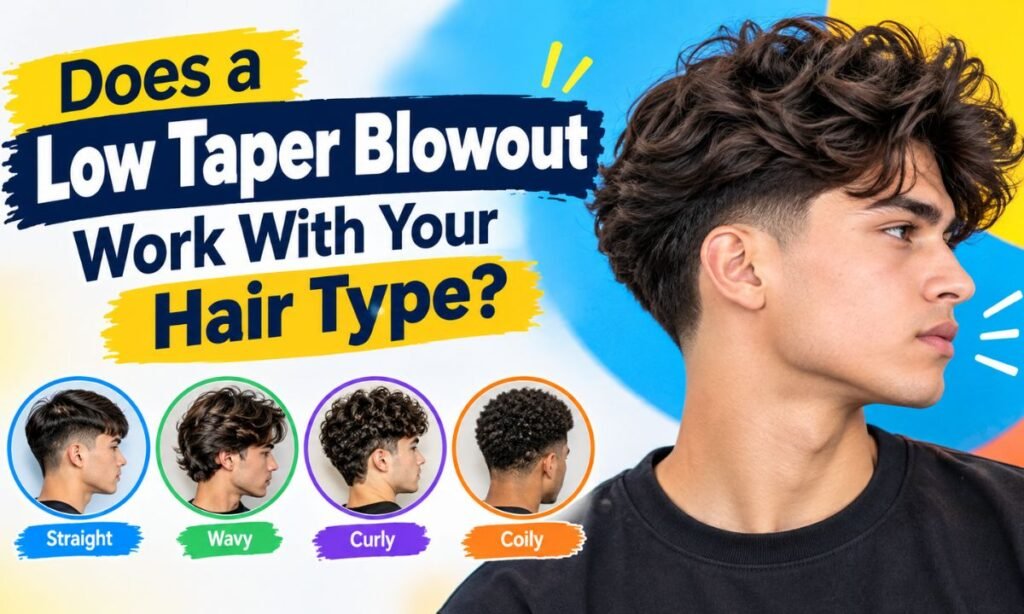
Short answer: yes, almost always. But how it looks and how you style it changes a lot depending on your hair texture. Straight hair needs more product help. Curly and coily hair basically do half the work for you.
Here’s how each texture plays out.
Straight Hair: How to Get Real Volume Without the Mushroom Effect
Straight hair is the trickiest texture for this cut, not because it looks bad, but because gravity fights you the whole time. Without the right technique, the top can flop flat within an hour or puff out sideways into what barbers jokingly call the “mushroom” look.
The fix is in the blow-drying technique, not the cut itself. Dry your roots first, lifting straight up with the brush, then direct the airflow back and slightly to one side. A light matte paste or volumizing powder at the roots gives the style something to grip onto.
Ask your barber for slightly more length on top than you think you need. Straight hair needs that extra inch or so to hold real lift once it’s dry.
Wavy Hair: The Path of Least Resistance

Wavy hair is honestly the easiest texture for a low taper blowout. You’ve already got natural movement working in your favor, so you don’t need heavy styling to get a full, textured look.
A quick blow-dry with your fingers, or a light pass with a round brush, is usually all it takes. The waves add their own texture on top of the height, so the finished style looks fuller than the actual hair length would suggest.
Sea salt spray or a light texture cream brings out the wave pattern even more. Most wavy-haired guys can skip heavy pomade entirely and still get a strong shape.
Curly Hair: The Most Visual Payoff of Any Texture
If you’re curious which texture gets the biggest “wow” factor from this cut, it’s curly hair. The natural coil pattern gives the top serious dimension without much styling effort at all.
Curls already push upward and outward on their own, so the blowout technique here is more about shaping than lifting. A diffuser attachment on your blow dryer helps define curls instead of frizzing them out.
Ask your barber to keep more length on top than they might for straight hair, since curls shrink up quite a bit once they dry. What looks long wet is often much shorter dry.
Coily / Afro Hair: Volume Built In, Shape Is the Job
Coily and afro-textured hair already has built-in volume, so the “blowout” part of this style is less about creating height and more about shaping what’s already there into a clean, rounded silhouette.
Your barber will focus on shaping the perimeter with clippers and shears while leaving the top full. A leave-in conditioner and light curl cream help define the shape without weighing it down.
This texture often needs the least daily styling of any group here. A quick pick or afro comb in the morning usually does the job.
What Face Shapes and Lifestyles Does It Suit?
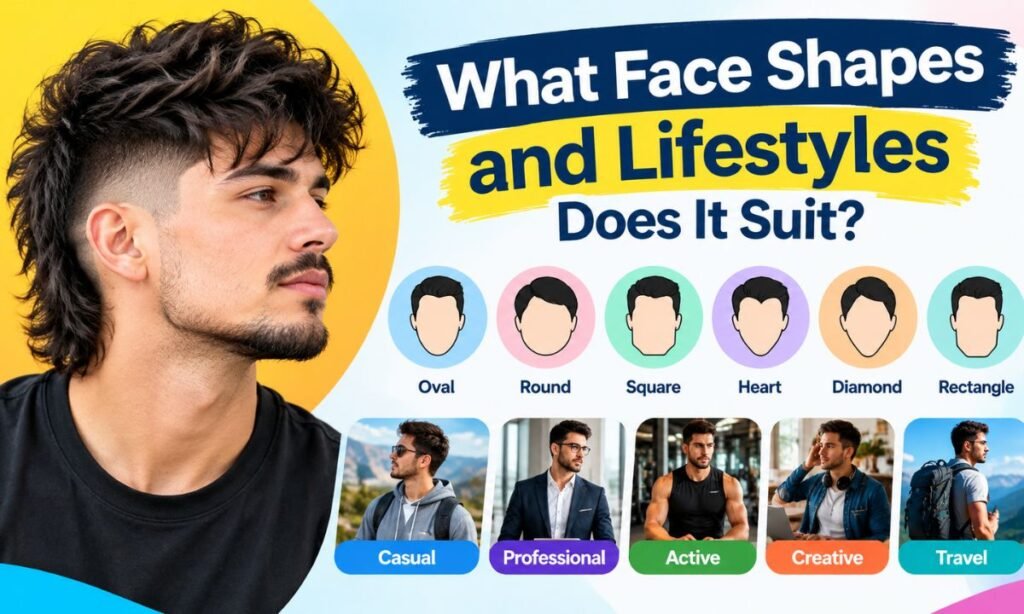
This is a genuinely flexible haircut, but a few small tweaks make it work even better depending on your face shape.
- Square faces: The rounded top softens strong jawlines nicely.
- Oval faces: Pretty much anything works here, including this cut as-is.
- Round faces: Ask for a bit more height and a textured fringe up front to add length visually.
- Long faces: Keep the top shorter and fuller side to side rather than tall.
Lifestyle matters just as much as face shape. If you’re in an office five days a week, the low taper’s soft, understated sides read as polished rather than trendy. If you’re more casual day to day, you can push the top longer and messier without it clashing with anything.
How Do You Ask Your Barber for a Low Taper Blowout?
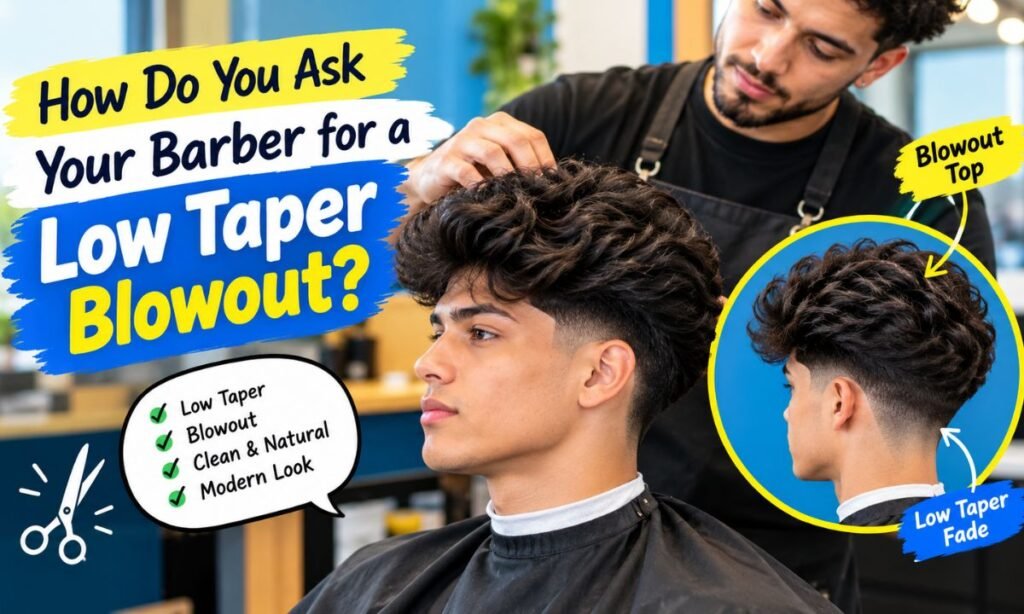
Most bad haircuts come down to unclear communication, not a bad barber. Walking in and saying “taper blowout” alone leaves too much room for interpretation.
Here’s what to say instead:
- Lead with “low.” Say “low taper” first so the fade zone stays close to your ears and neckline.
- Name your guard number. More on this below, but having a number ready speeds things up a lot.
- Specify the top length. Say how many inches you want left on top for the blowout.
- Mention your texture. If you’re curly or coily, remind your barber your hair shrinks when it dries.
- Bring a photo. Even one clear reference photo saves a ten-minute back-and-forth conversation.
If you want, tell your barber you’ll be blow-drying it yourself at home so they leave the right amount of length and weight for that styling routine.
Guard Numbers for a Low Taper Blowout: What Do They Mean?
Clipper guard numbers control how much hair gets left behind. Lower numbers mean shorter hair, higher numbers mean longer hair. Here’s a quick reference so you’re not guessing at the chair.
| Guard Number | Length Left | Where It’s Used |
| 0 | Skin/very close | Rarely used on a taper, mainly for fades |
| 1 | 1/8 inch | Neckline blending on a very low taper |
| 2 | 1/4 inch | Sideburn and neckline start point |
| 3 | 3/8 inch | Common starting guard for the taper zone |
| 4 | 1/2 inch | Where the taper blends into longer sides |
Most low taper blowouts start around a 2 or 3 guard near the hairline and blend upward from there, without a specific number applied above the ears. Your barber will usually free-hand blend that transition with shears once the guard work is done.
How Do You Style a Low Taper Blowout at Home?
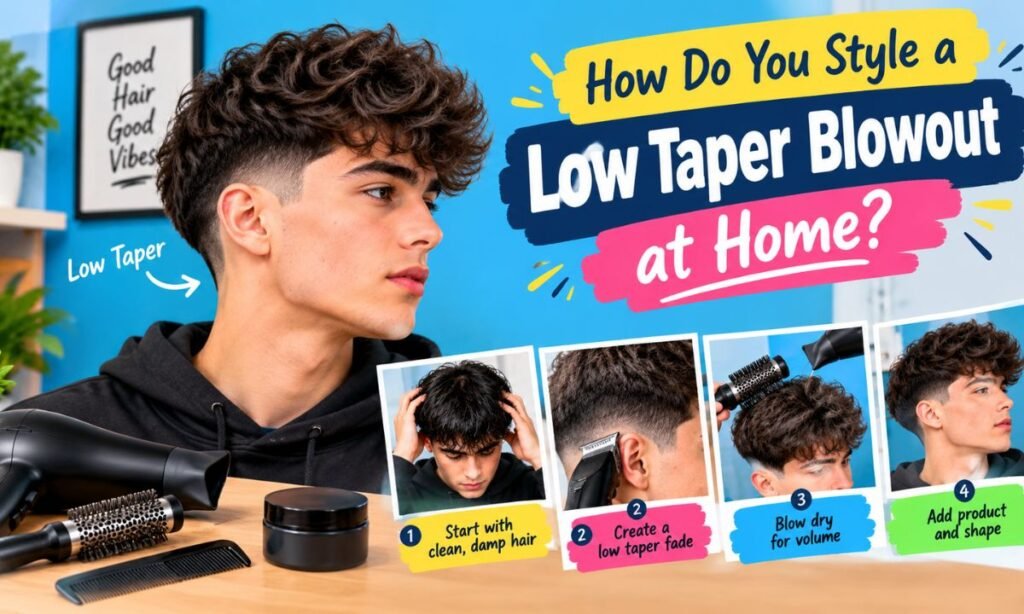
Styling this cut daily isn’t complicated once you’ve done it a few times. Here’s the basic routine most guys settle into.
- Start with damp, not wet, hair. Towel-dry until it’s just damp.
- Apply your product first. A small amount of volumizing mousse or light cream through the roots.
- Section and dry with a round brush. Lift at the roots and pull hair up and slightly back.
- Finish with cool air. This locks the shape in place once you’re happy with it.
- Add a light hold product if needed. A matte paste or texture clay for extra grip through the day.
The whole process usually takes five to ten minutes once it becomes routine. Skipping the round brush is the most common reason the volume doesn’t hold.
How Often Does a Low Taper Blowout Need a Trim?
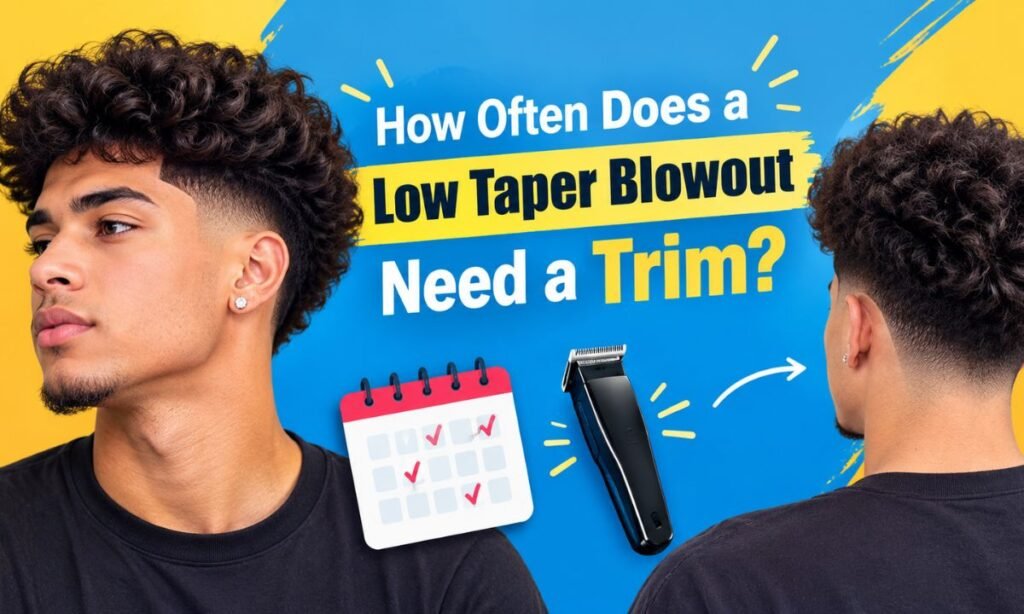
A low taper blowout generally holds its shape for three to five weeks before it starts looking a little shaggy around the edges. Because the taper is soft and gradual to begin with, it grows out more gracefully than a sharper fade would.
The neckline and sideburns are usually the first areas to look messy. A quick cleanup trim around the three-week mark can stretch the time between full haircuts if you’re trying to save on barber visits.
The top itself can usually go longer between trims than the sides, since extra length there just means slightly more volume, not a ruined shape.
Low Taper Blowout Variations: Which Style Fits You?
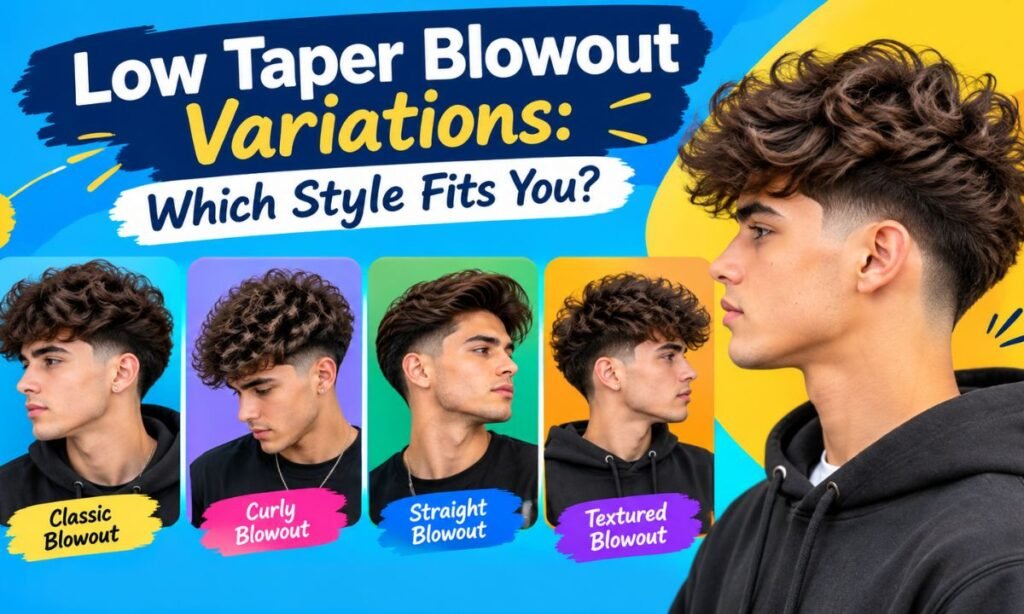
The base cut is flexible enough to support a handful of solid variations. Here’s a rundown of the most requested ones right now.
Textured Fringe Low Taper Blowout
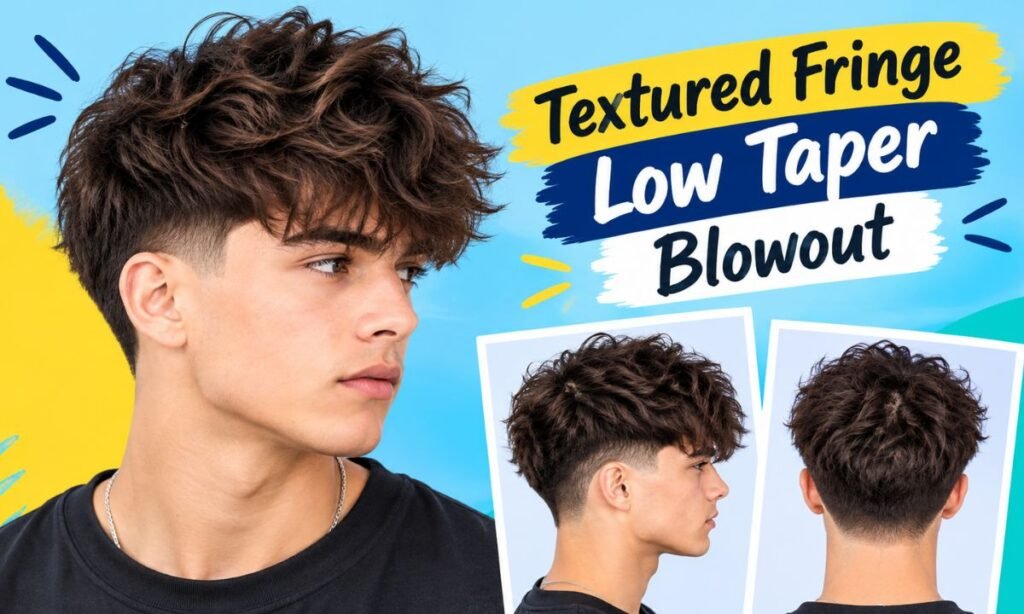
This version adds a soft, piece-y fringe up front instead of a fully swept-back top. It works especially well with wavy or curly textures, where the natural movement adds extra texture to the fringe without much product.
Edgar / Blunt Fringe Low Taper Blowout
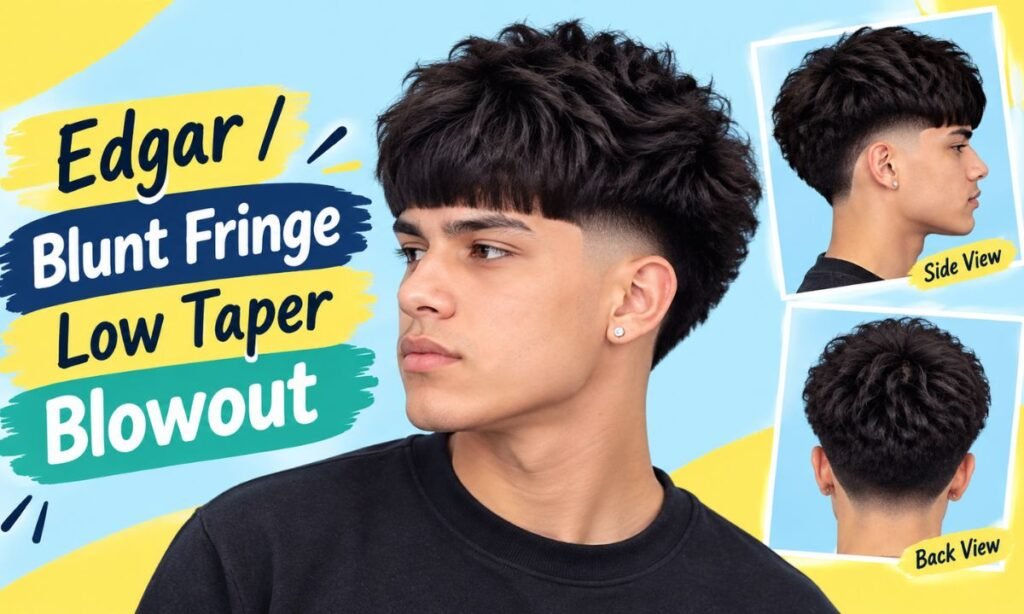
The Edgar cut pairs a straight, blunt fringe line with the same soft taper on the sides. It’s a bolder, more defined look than a textured fringe and tends to suit thicker, straighter hair best.
Grown-Out / Longer Top Low Taper Blowout
If you’re not ready to commit to short sides forever, this variation keeps the top noticeably longer, letting waves or curls flow back after drying instead of standing straight up. It’s a softer, more relaxed take on the same base cut.
Curly Afro Low Taper Blowout
This version leans into natural curl pattern instead of fighting it. The sides stay low and soft while the top keeps its full, rounded curl shape with minimal flattening from styling tools.
Perm Low Taper Blowout
Some guys with naturally straight hair get a perm on top specifically to make the blowout easier to maintain. The added wave pattern holds volume with far less daily styling effort than straight hair typically needs.
What You Need Before Getting a Low Taper Blowout
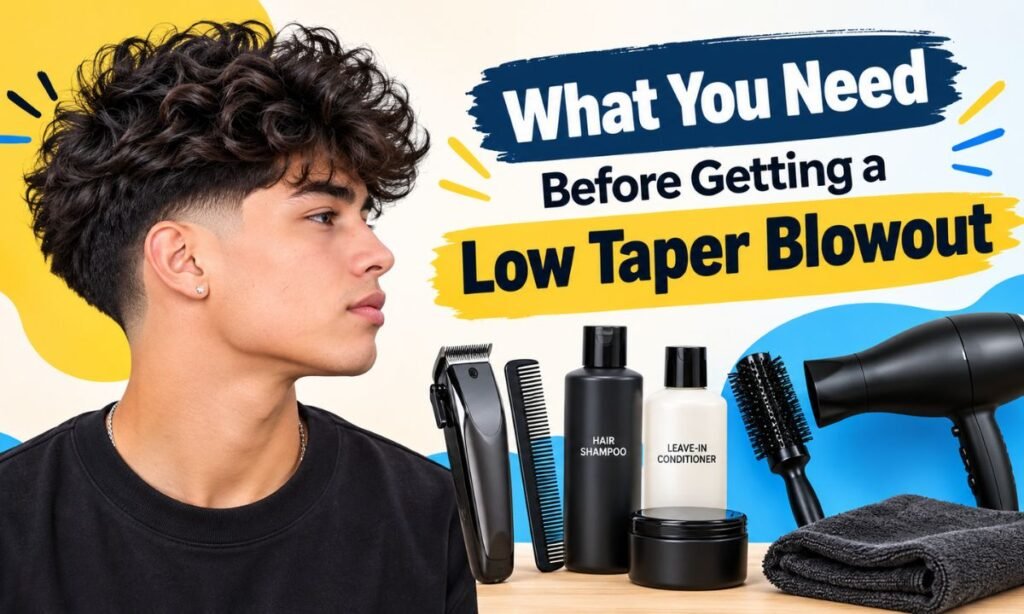
A few small things make the appointment go smoother and the results last longer.
- A reference photo that matches your actual hair texture, not just a style you like the look of.
- A guard number in mind, even a rough one, based on the chart above.
- Honesty about your styling habits. If you won’t blow-dry it daily, say so, so your barber adjusts accordingly.
- A basic styling product at home, whether that’s paste, cream, or mousse depending on your texture.
- Realistic timing expectations, since this cut needs regular upkeep to stay sharp.
Frequently Asked Questions
Is a low taper blowout hard to maintain? Not really. It needs a five to ten minute daily styling routine and a trim every three to five weeks.
Does a low taper blowout work for thin hair? Yes, though thin hair may need a volumizing product to hold the lift longer through the day.
Can I get a low taper blowout without a blow dryer at home? You can, but the height and shape will fade faster without one. A dryer really is part of the cut.
Is a low taper blowout too casual for work? No. The soft, low sides actually read as polished and professional in most office settings.
How long does hair need to be for a blowout on top? Most barbers recommend at least two to three inches on top to get real lift and movement.
Does a low taper blowout suit older men too? Yes. The soft, understated sides work well at any age and don’t skew toward one specific look.
What’s the difference between a low taper and a mid taper blowout? A mid taper starts higher on the head, giving more visible contrast than the subtle blend of a low taper.
Final Thoughts
A low taper blowout works because it doesn’t try too hard. Soft sides, a full top, and just enough structure to look put together without looking styled to death. Whether your hair is straight, curly, or somewhere in between, the same core idea holds up.
Bring your guard number, bring a photo, and tell your barber how you actually plan to style it at home. That’s really all it takes to walk out with a cut that works Monday through Sunday.

Ethan Parker is a hair and hairstyle writer with 5 years of experience researching haircuts, styling techniques, and hair trends. He shares simple tips, practical guides, and hairstyle ideas to help readers choose looks that suit them. His goal is to make hair care and styling easy to understand for everyone.